

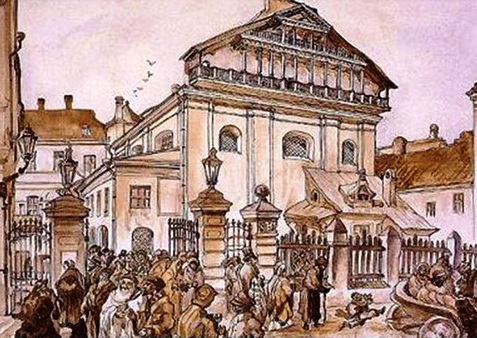
Inspiration – Eglė Ridikaitė | Jonas Kulikauskas | Loïc Salfati
The rediscovery of the Great Synagogue of Vilna has reached beyond archaeology and history. The remains uncovered in the excavation have inspired artists to look again at the lost Jewish city and to bring its memory back into the life of Vilnius today.
The Art of Eglė Ridikaitė
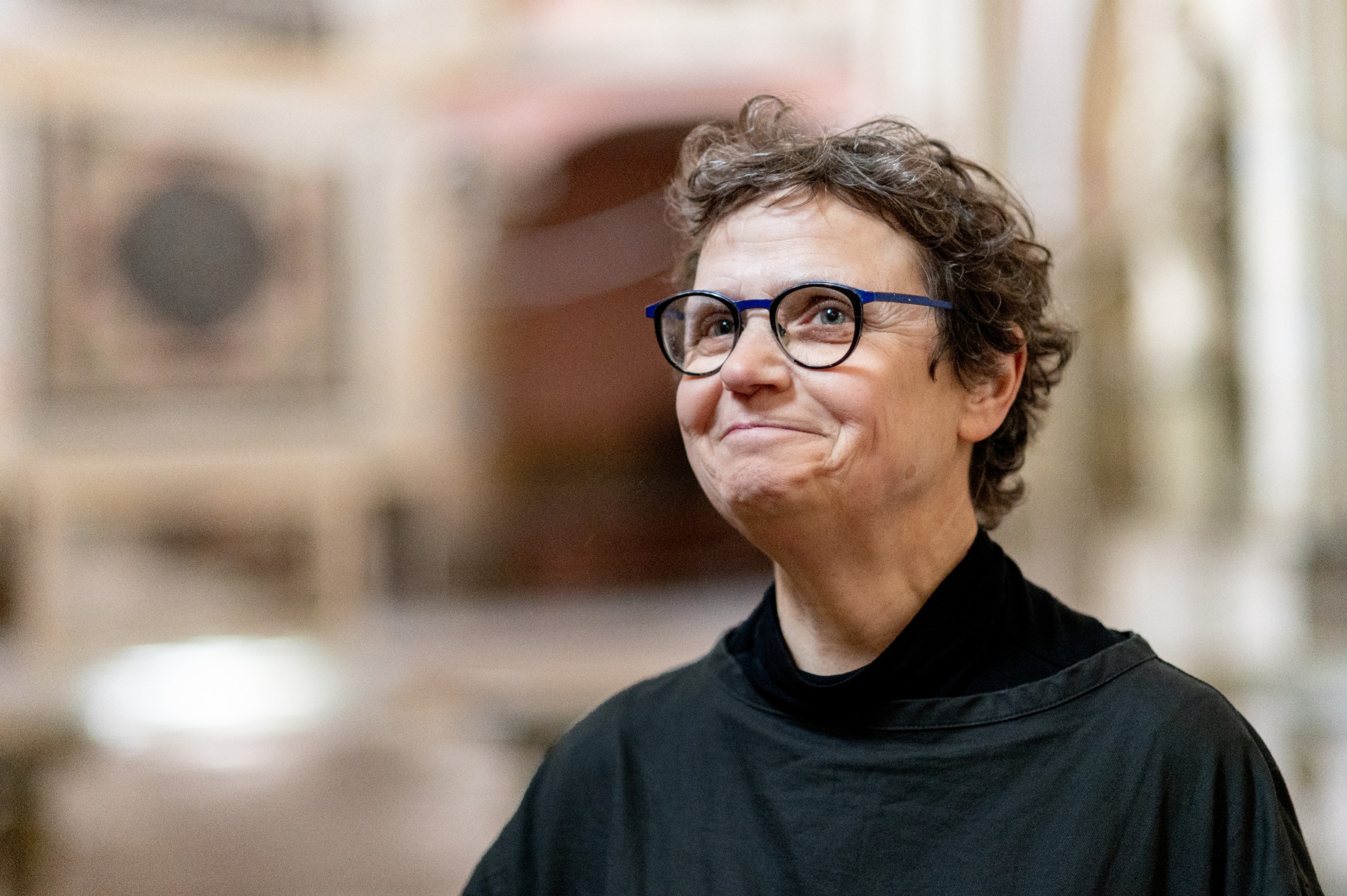
Eglė Ridikaitė (b. 1966) is one of Lithuania’s leading painters. A conceptual artist who combines graffiti techniques with traditional painting, she has exhibited since the 1990s and in 2020 received Lithuania’s National Culture and Arts Prize.

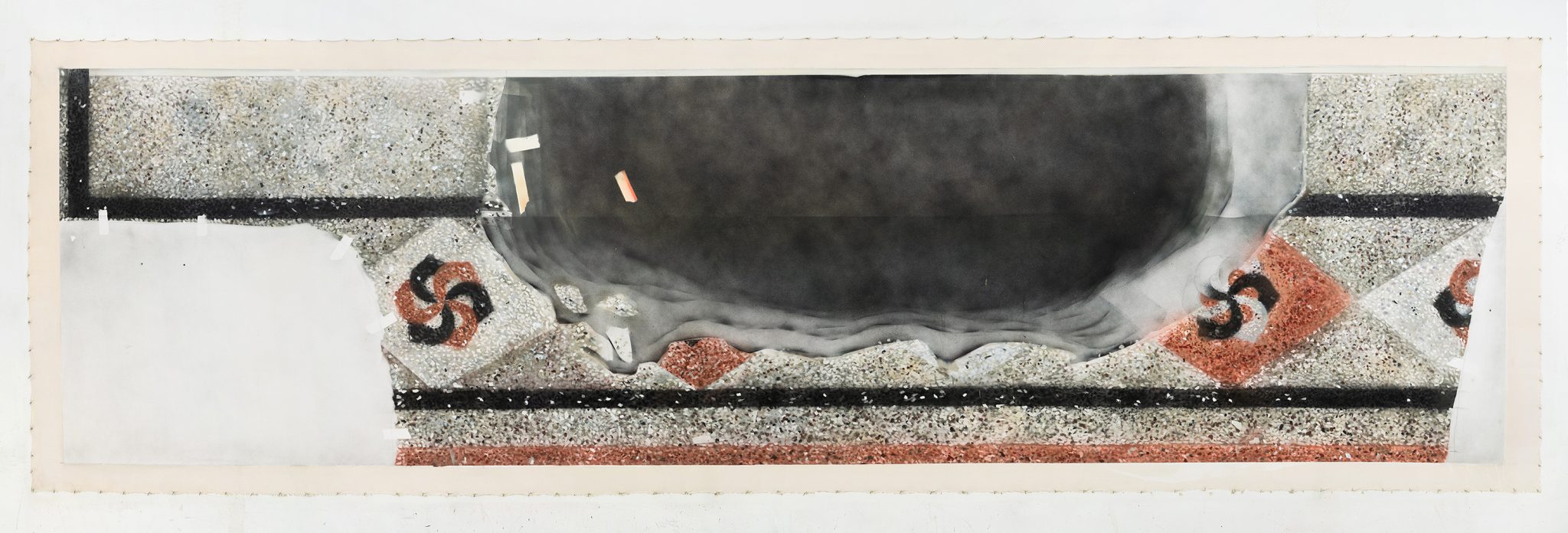
Her path to the Great Synagogue began with the decorative floors of old Vilnius. Curious about who had made these pavements and who had lived above them, she painted them at full scale in a series known as Cultured Floors. One of the first was the floor of a mikveh (ritual bath) in Užupis-Zarech’e, whose white and blue tiles led her to the Jewish history of the city.
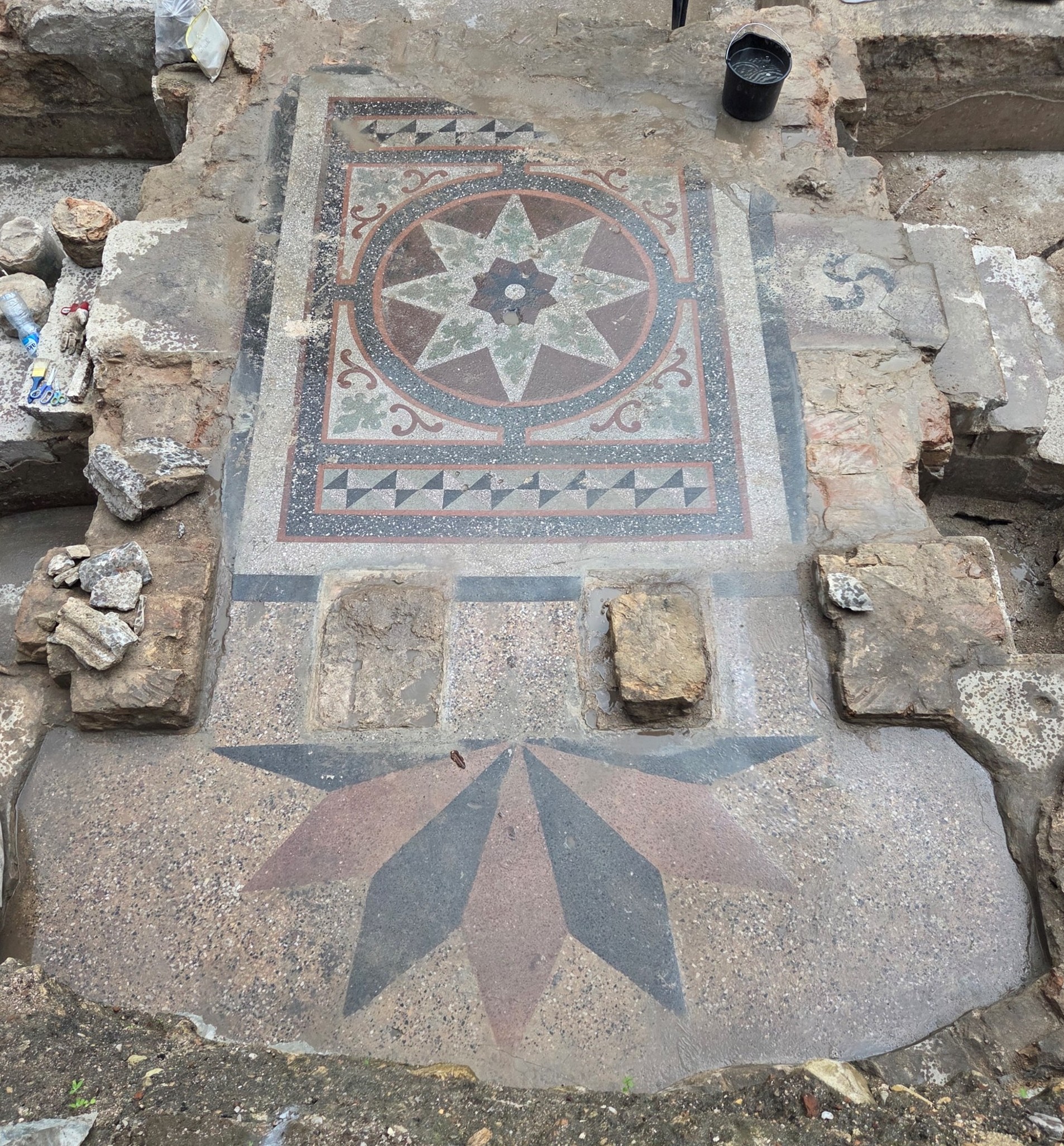
Her studio is in the Soviet-era school that was built on top of the ruins of the Great Synagogue. From her window she watched the excavation expose the terrazzo floor of the bimah, the platform from which the Torah was read. This led her to return to a series she had thought was finished. Since 2019 she has painted eleven of the ornamented floor fragments uncovered by the archaeologists of the Great Synagogue of Vilna Project, recording the destroyed sanctuary as she sees it, layer by layer.
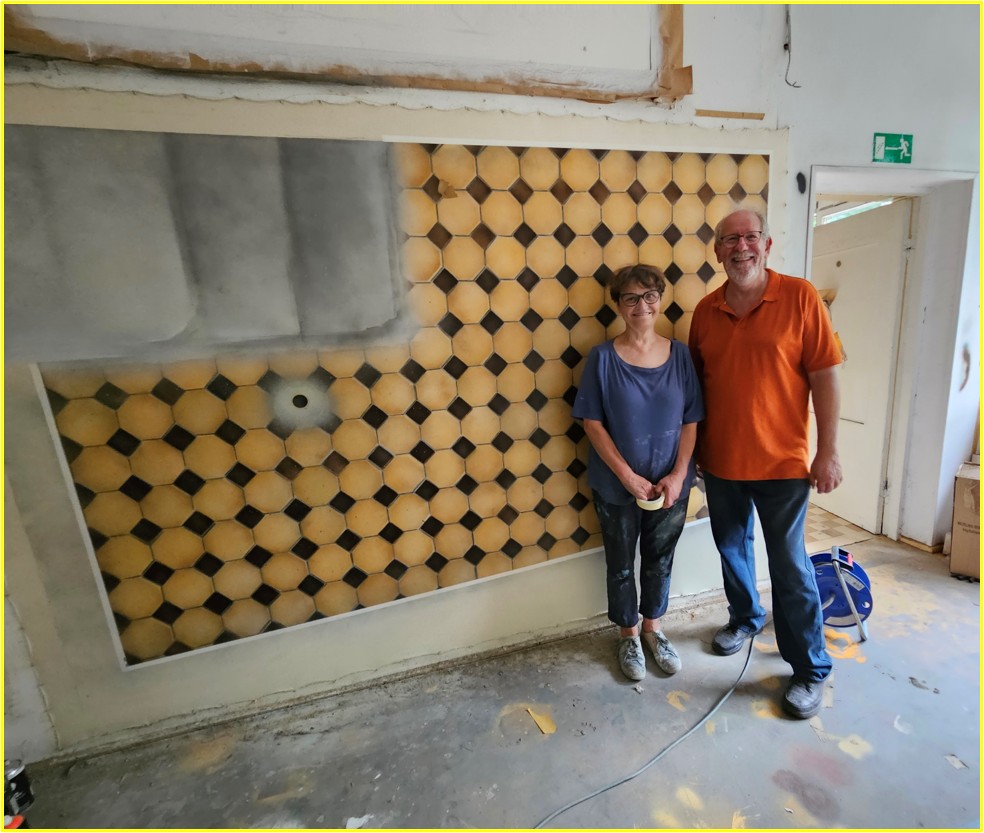
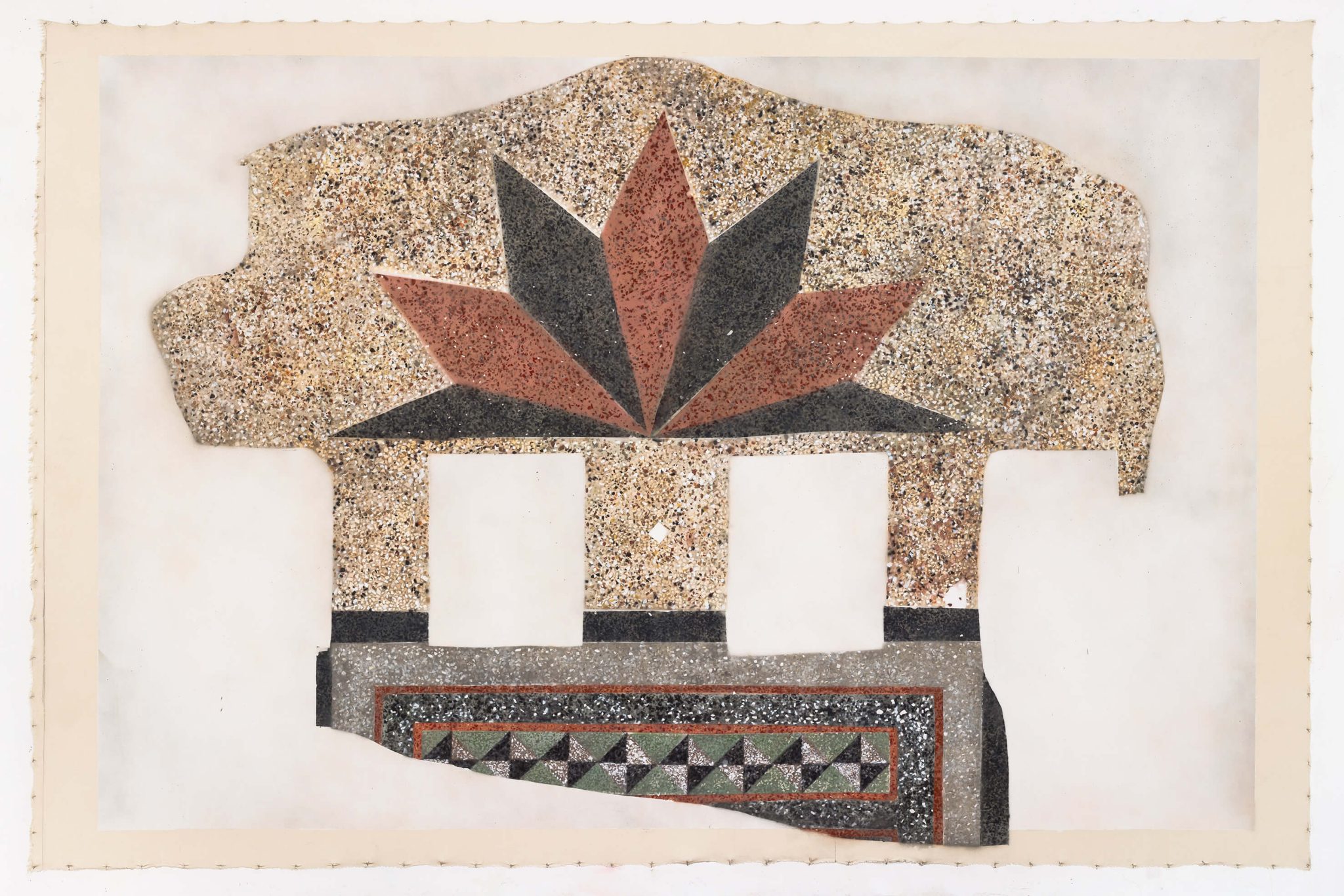
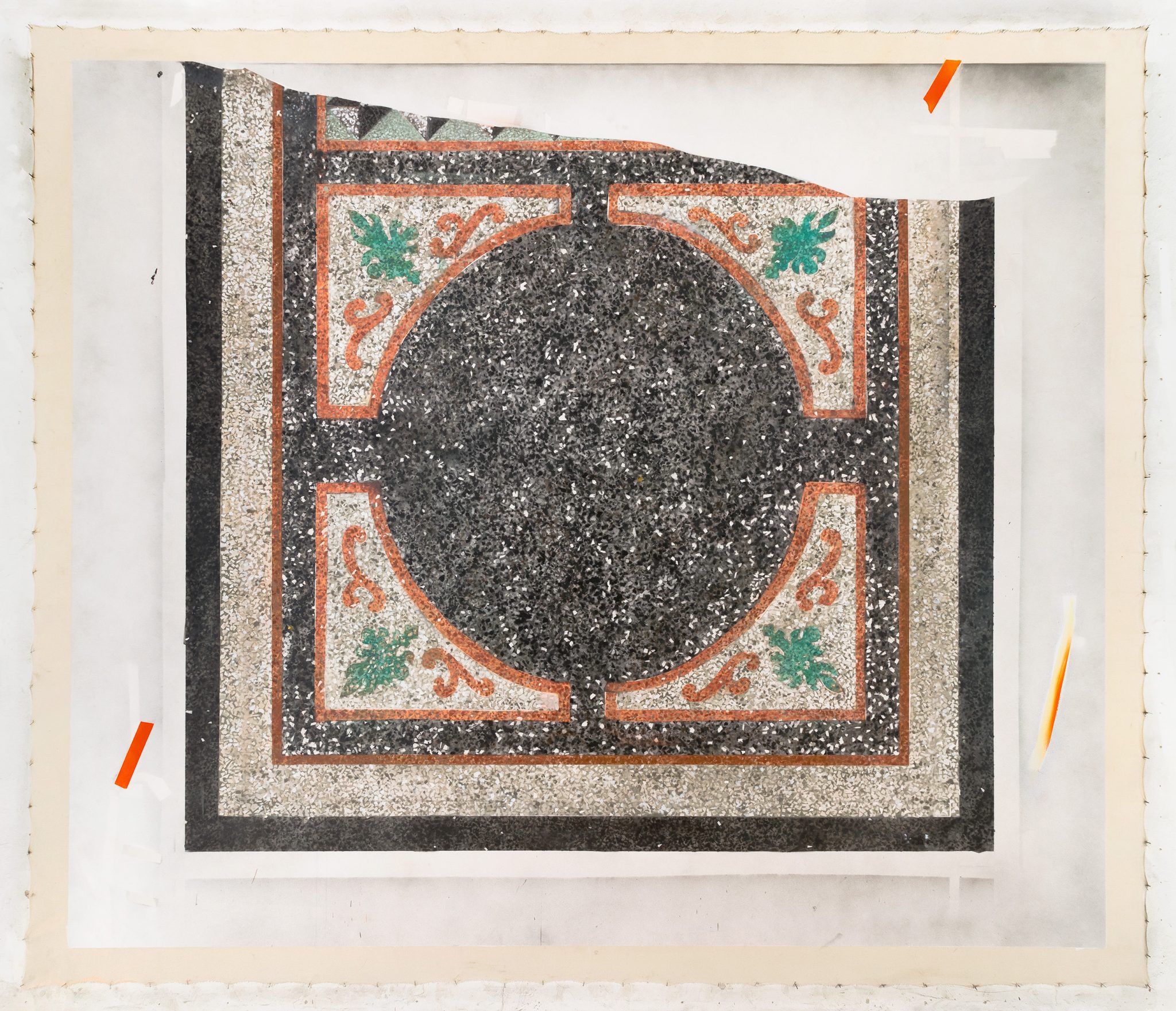
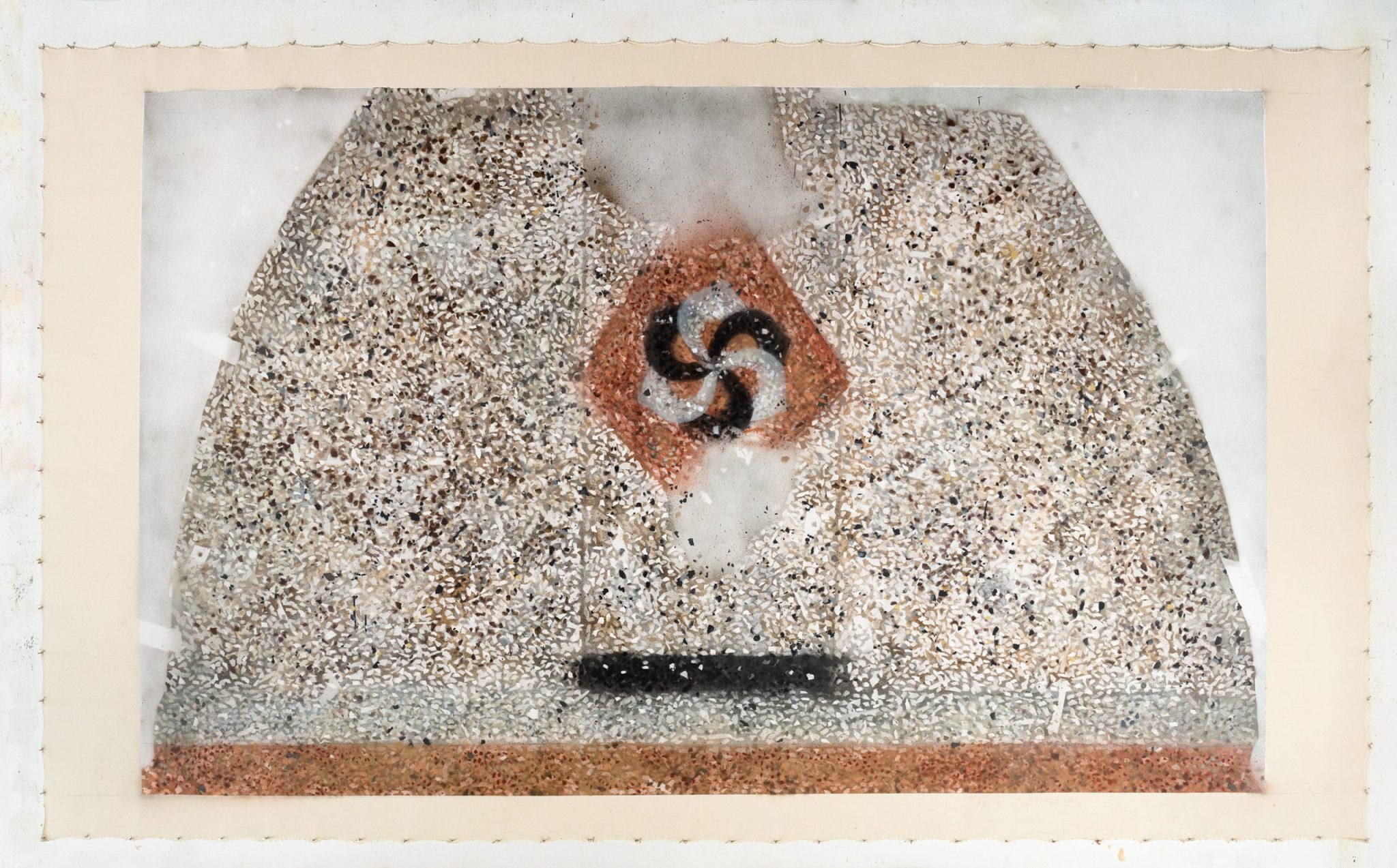


“Jewish Vilnius is a significant culture of Vilnius, which cannot be forgotten.”
— Eglė Ridikaitė, Made in Vilnius
We Are Guests
The painting cycle We Are Guests depicts the fragments of the Great Synagogue uncovered in the excavation – the floor of the bimah and the different historical layers of the building – and is one of the rare treatments of Jewish heritage and collective memory in contemporary Lithuanian art. In 2021 the Lithuanian Culture Institute and the Contemporary Art Centre in Vilnius released a short film about the series, directed by Mikas Žukauskas, following the artist in her studio above the synagogue.
Jewish Vilnius in the works of artist Eglė Ridikaitė · Lithuanian Culture Institute and Contemporary Art Centre, April 2021 · directed by Mikas Žukauskas · Watch on YouTube
link – Museum of Applied Arts and Design, Vilnius, 14 June – 2 October 2021
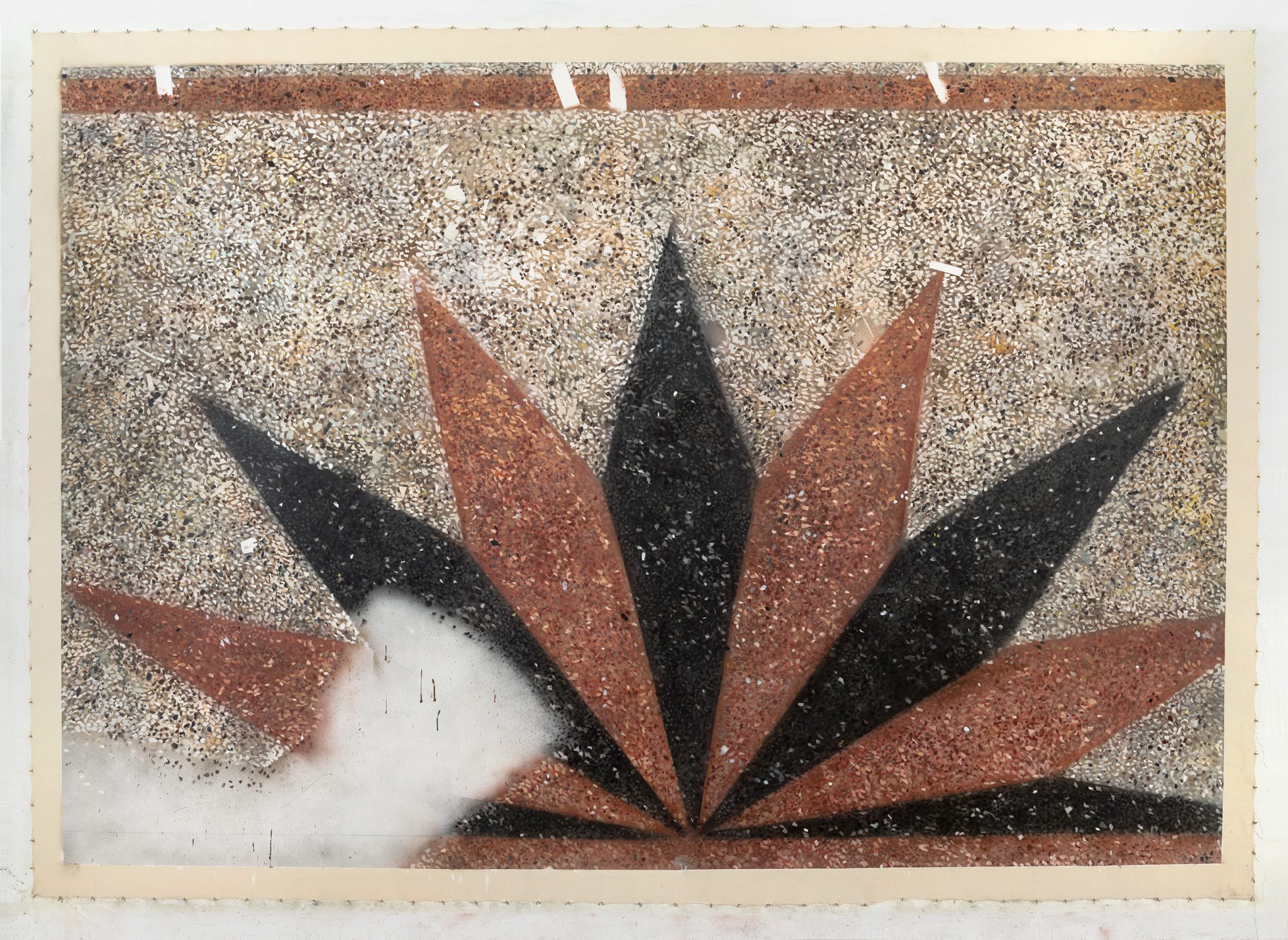
In 2021 the Lithuanian National Museum of Art showed Ridikaitė’s exhibition link (“towards”) at its Museum of Applied Arts and Design in Vilnius, curated by Laima Kreivytė and Agnė Narušytė. The paintings, made between 2016 and 2021, were created in her temporary studio in the Soviet-era school above the Great Synagogue, at the time when archaeologists were uncovering the synagogue’s remains below. Through them the artist set out to connect what lies beneath the ground with what stands above it, leading the viewer towards reconciliation, while acknowledging that nothing can restore justice to those who perished. Among the works were the synagogue’s columns, depicted as buried moons, and a floor ornament from the synagogue on Gėlių Street, then under restoration, which she cleaned of building dust, traced onto film and transferred to canvas, “developing” the image with aerosol paint during the exhibition.
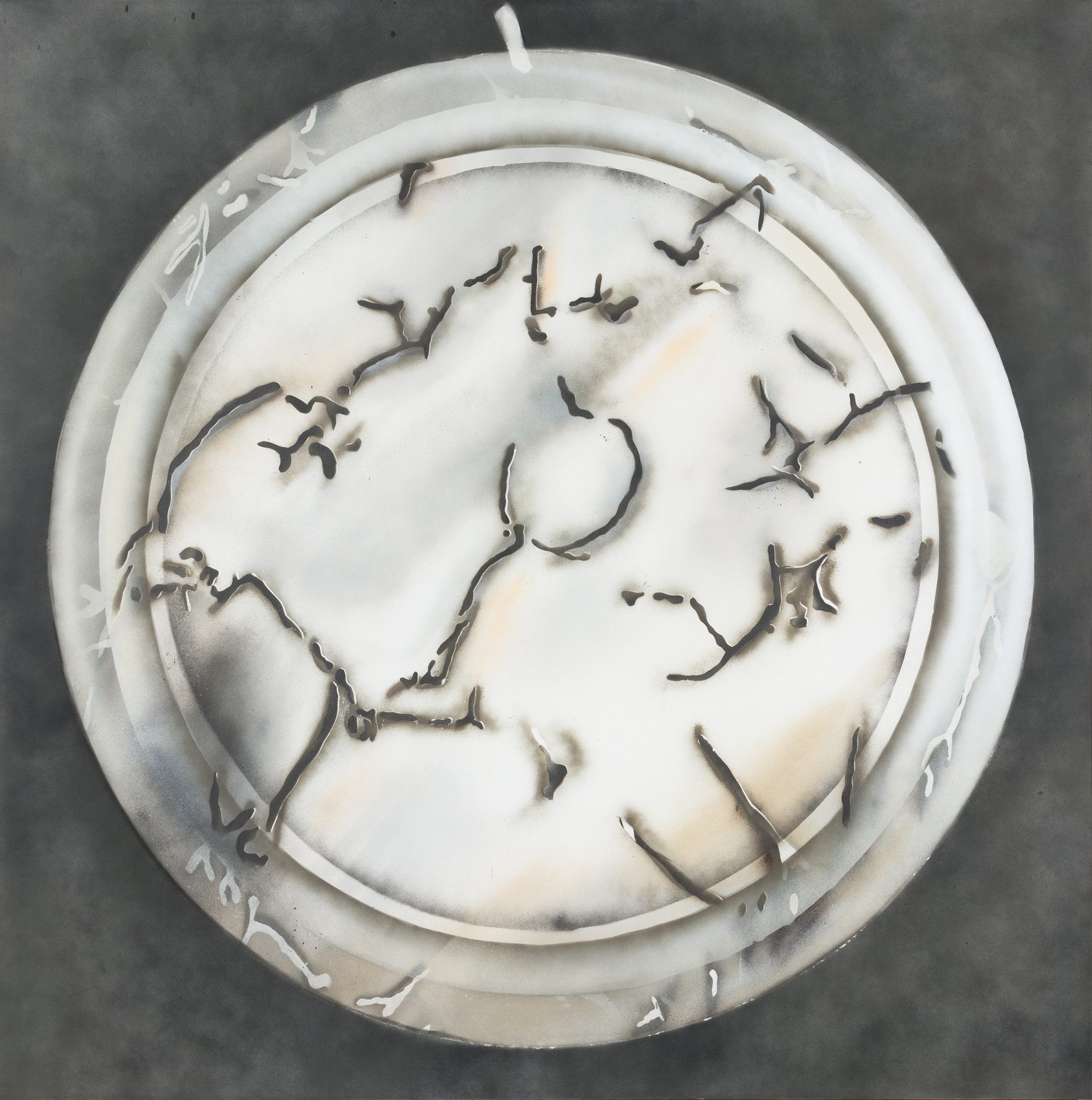
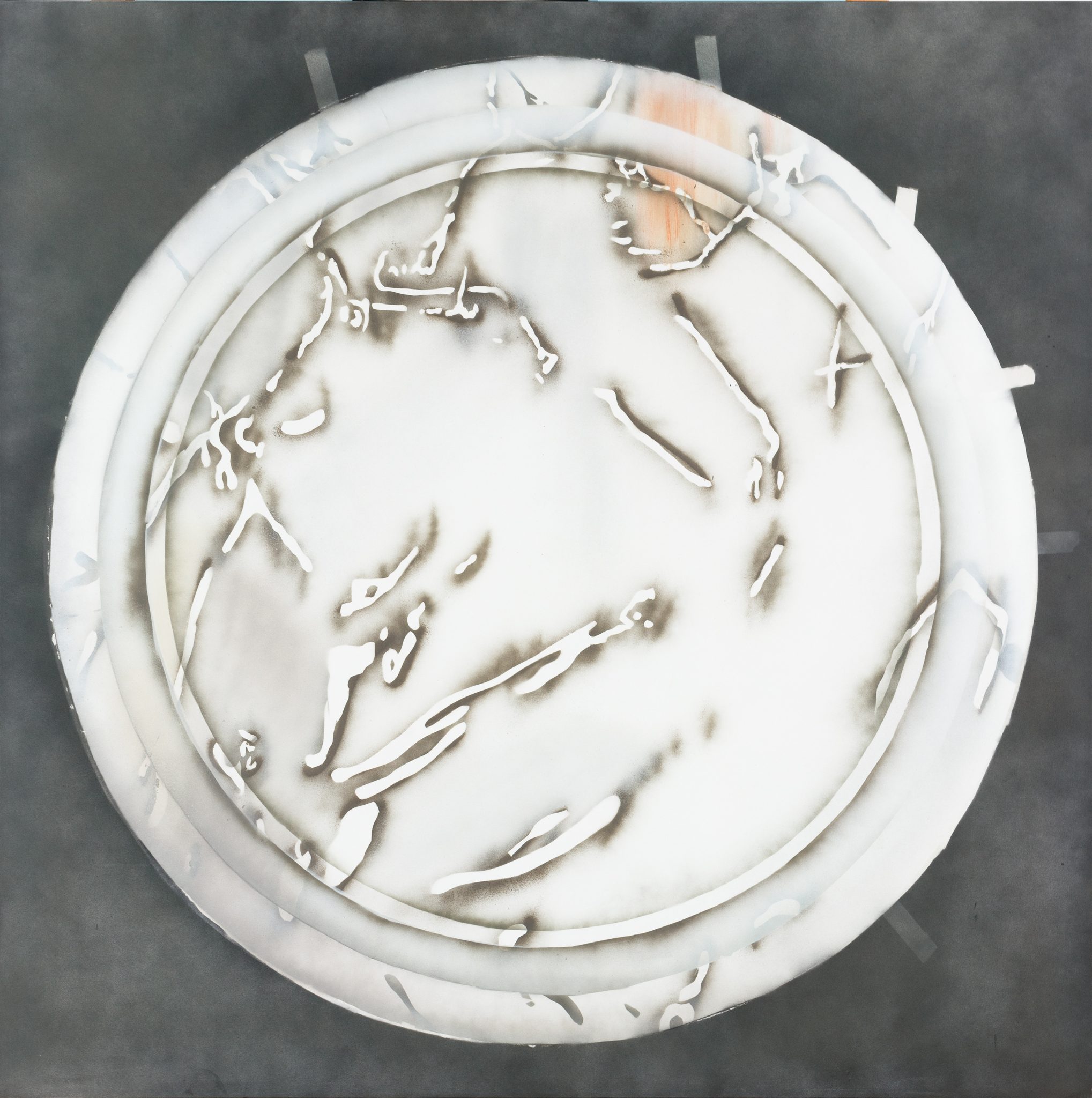
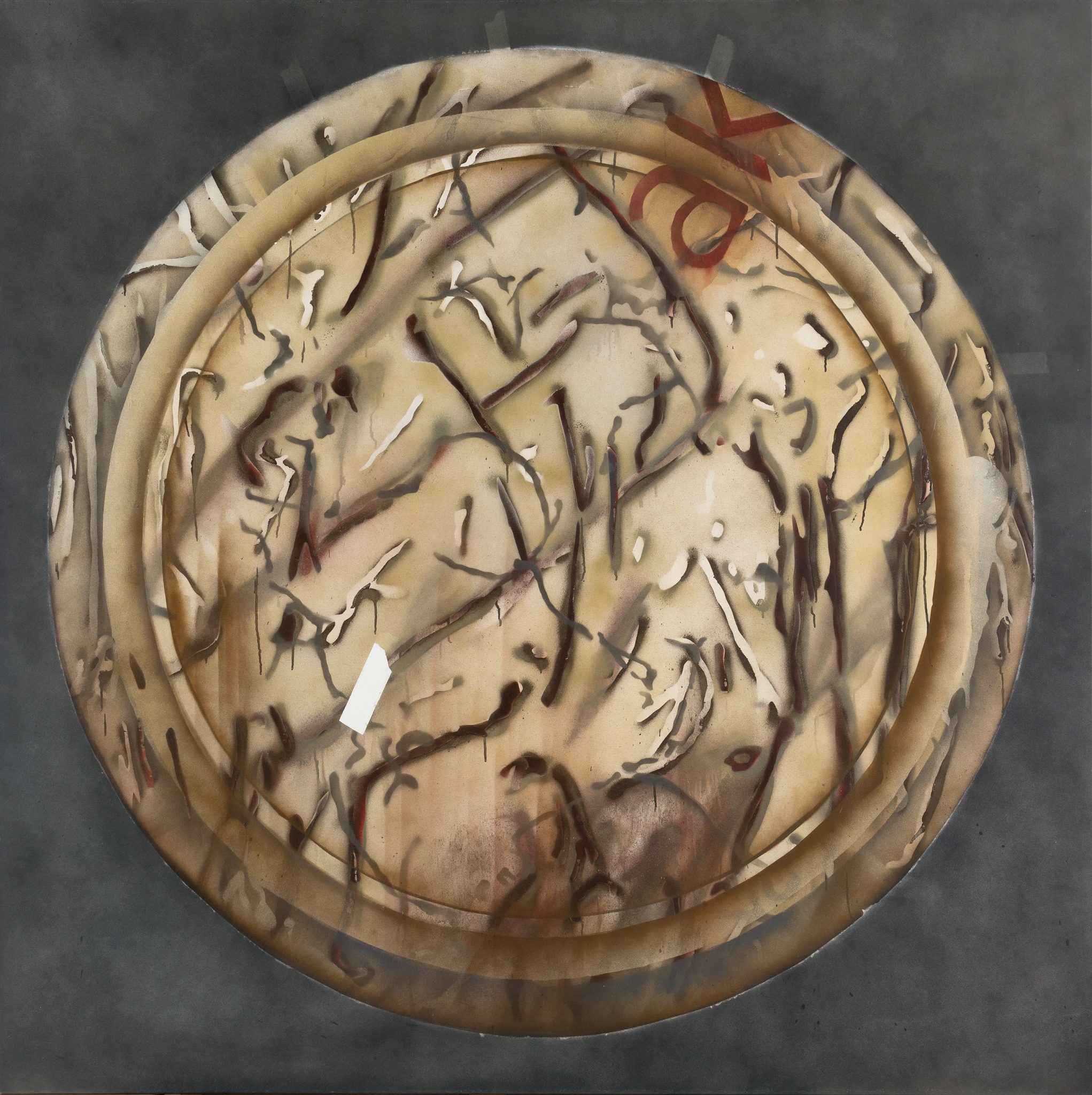
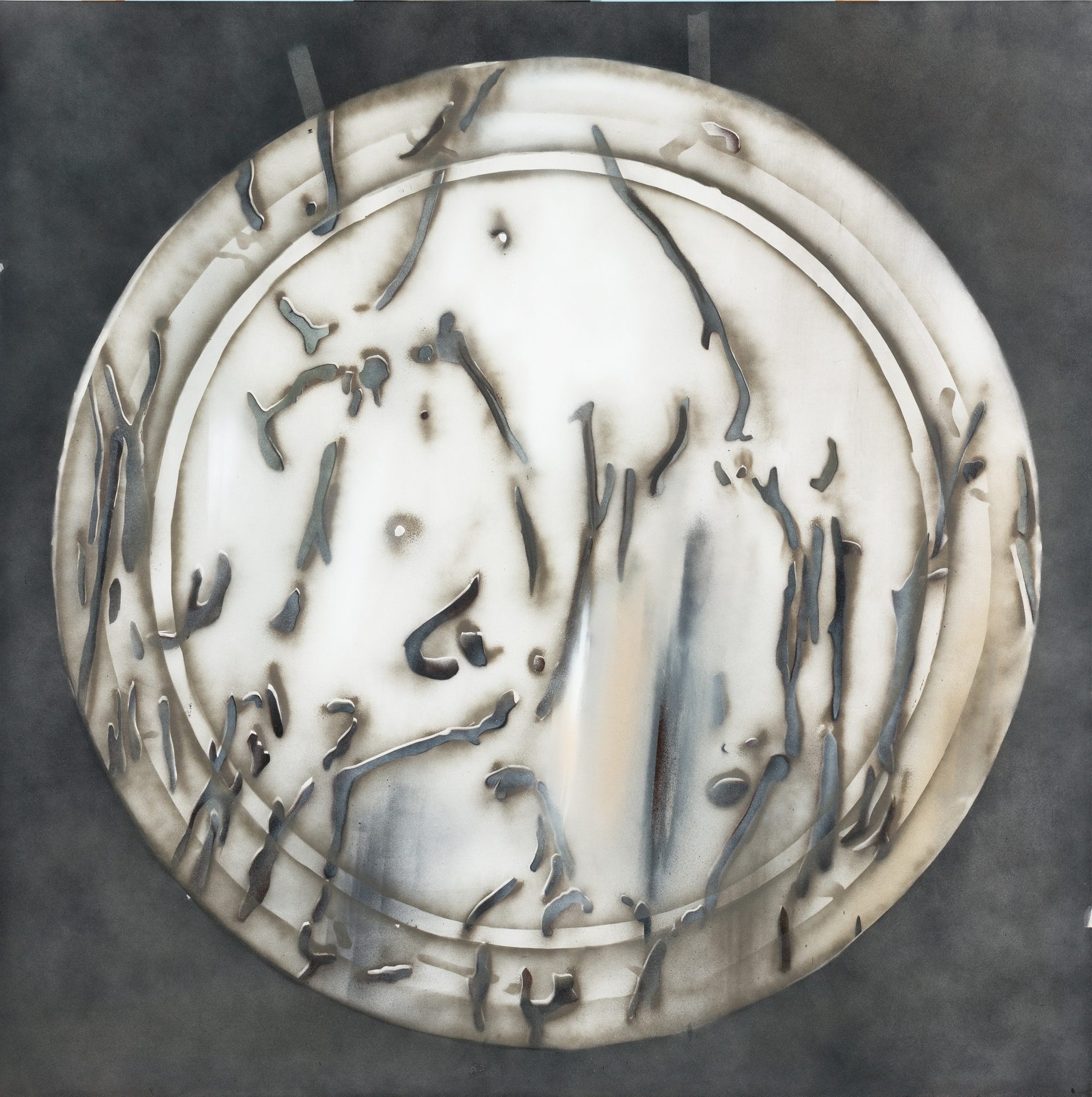
‘Buried Moons’ – the four columns of the Bimah of the Great Synagogue (© Eglė Ridikaitė)
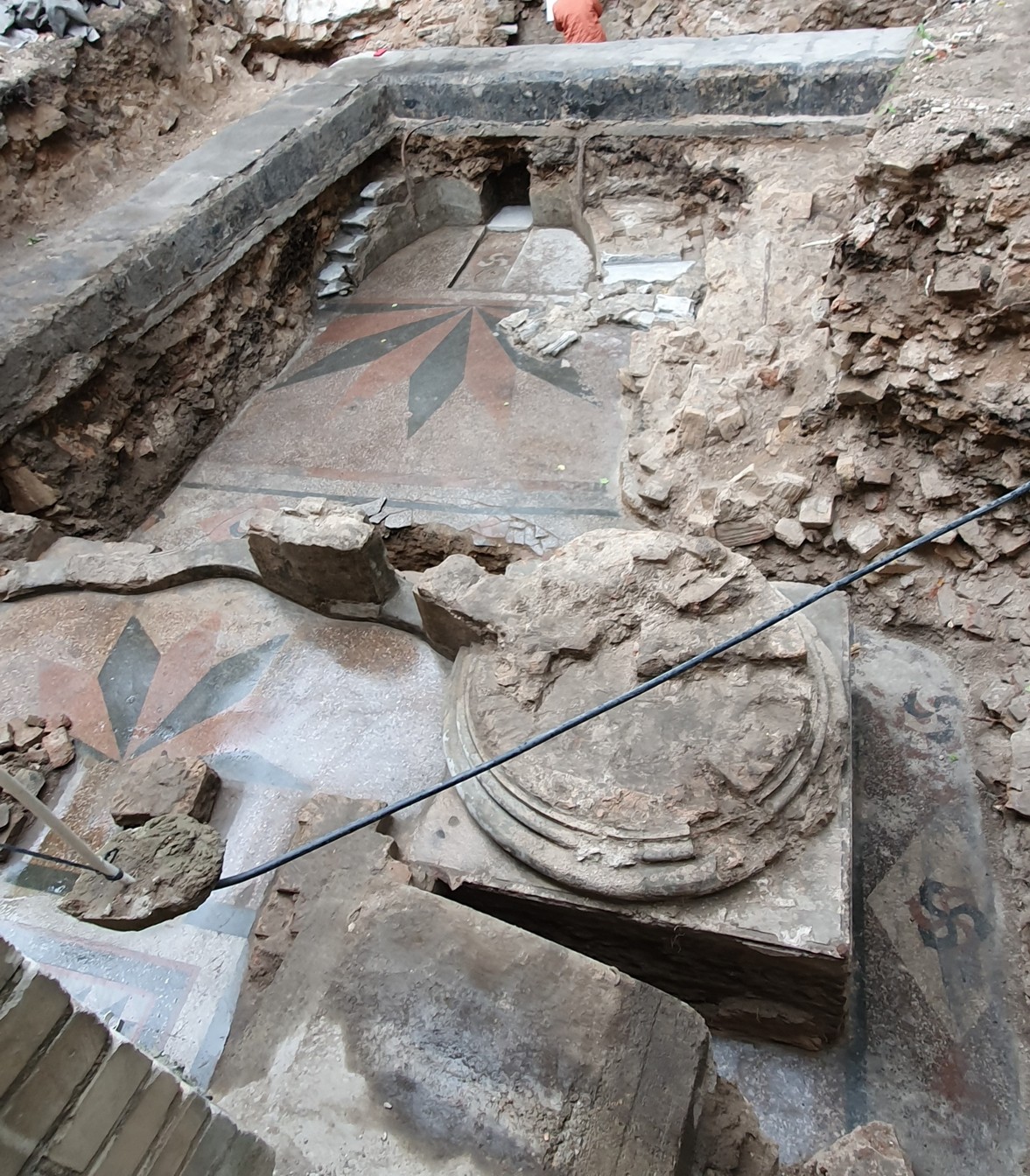
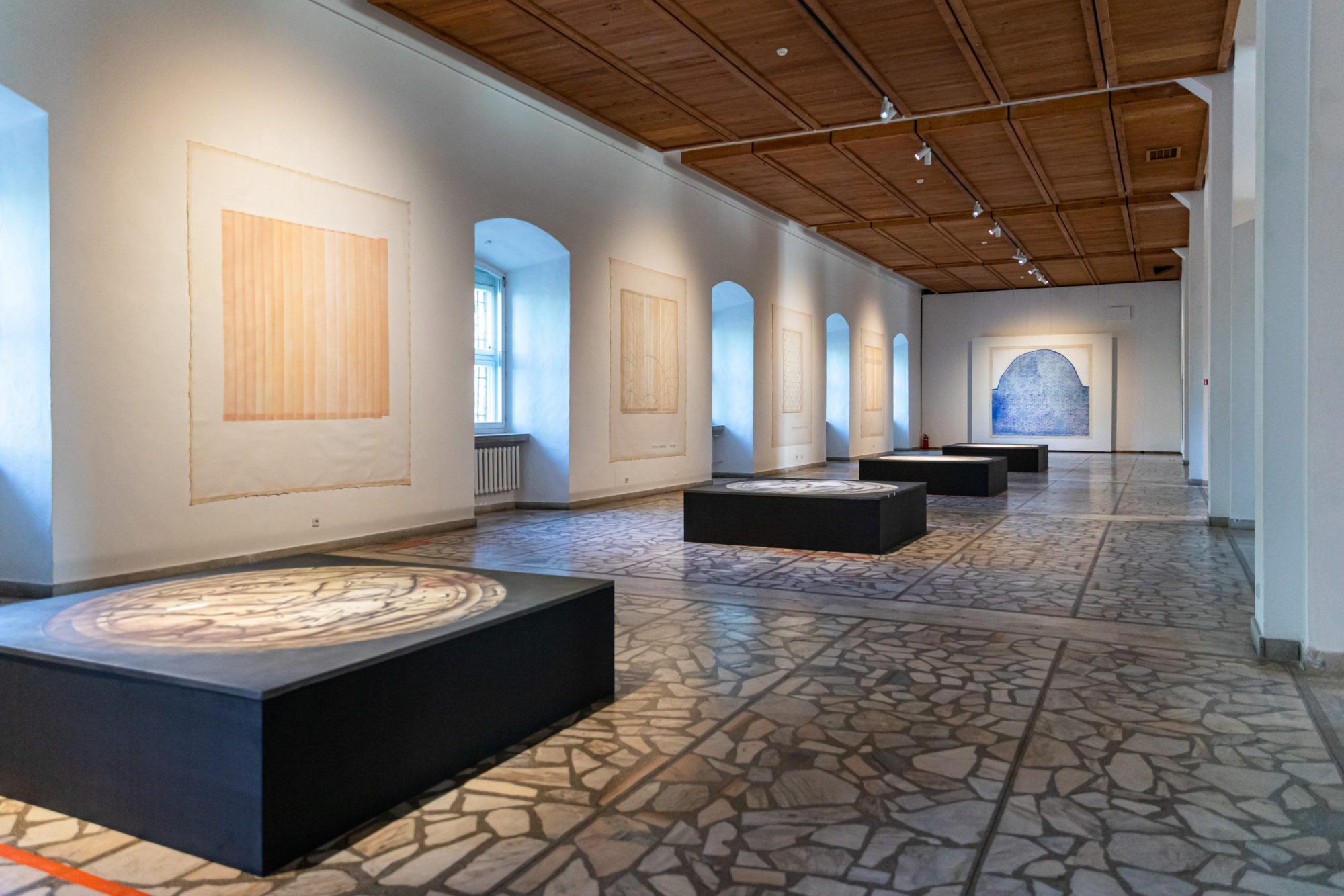
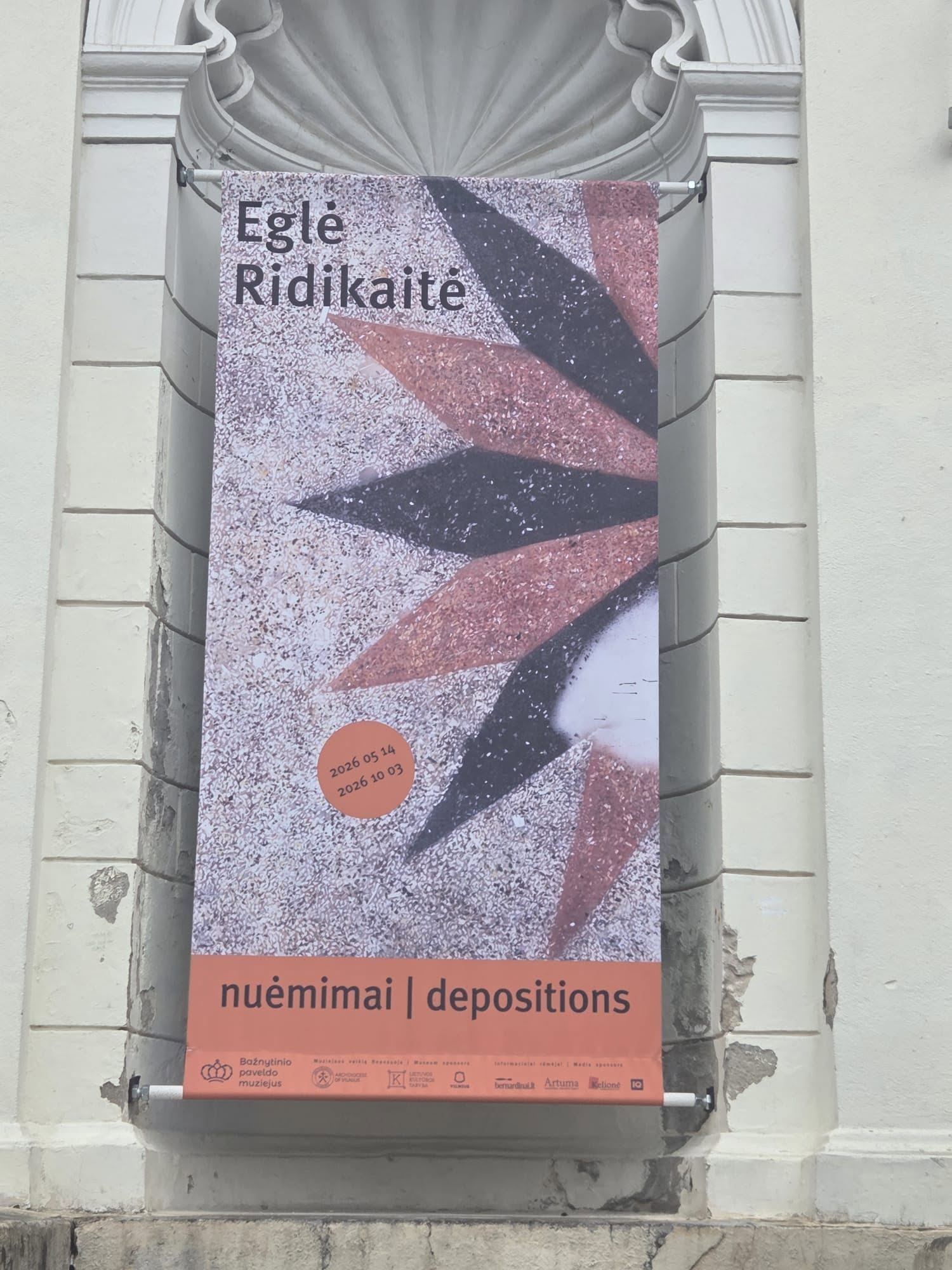
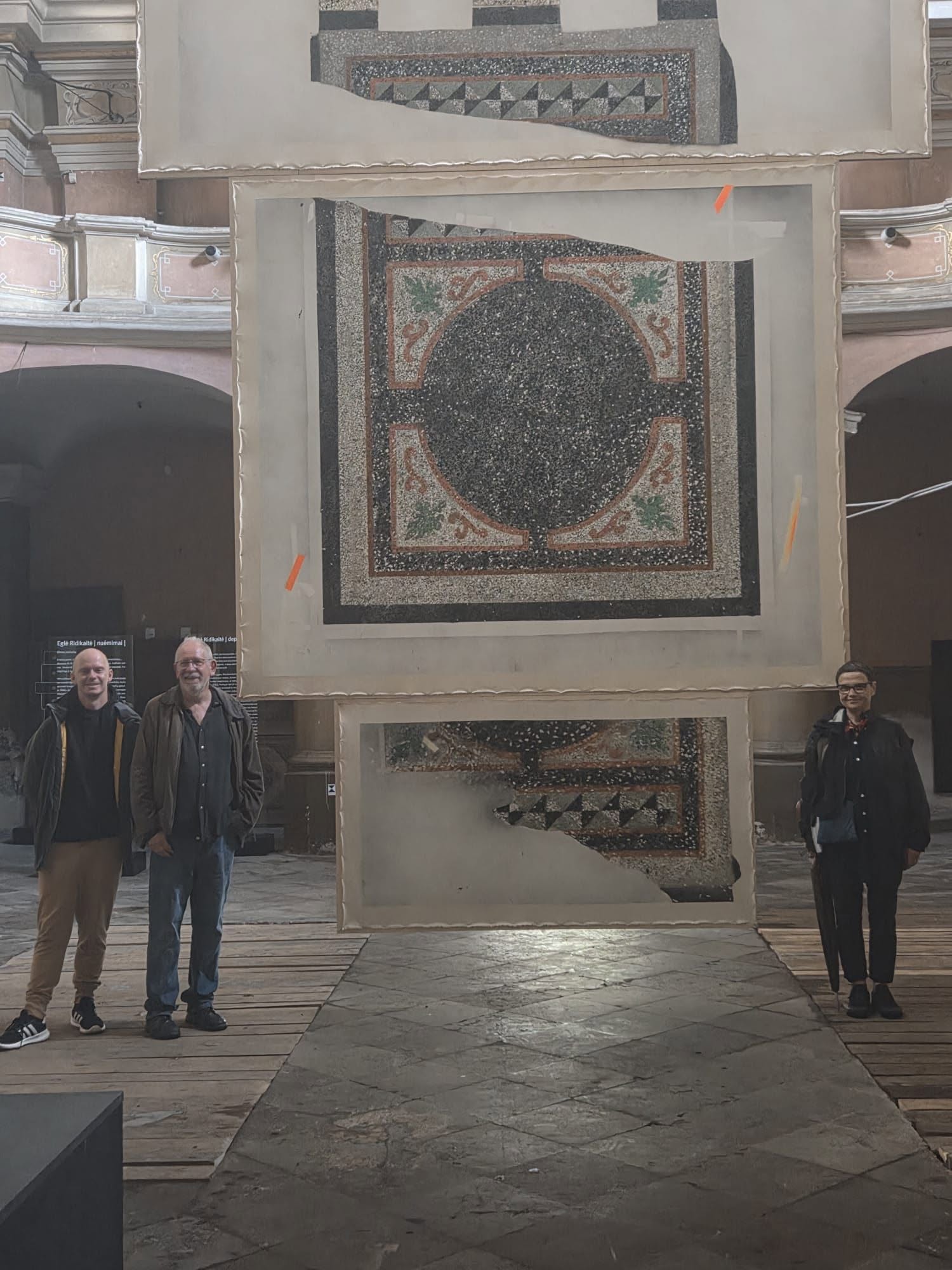
nuėmimai | depositions – St George the Martyr Church, 14 May – 3 October 2026
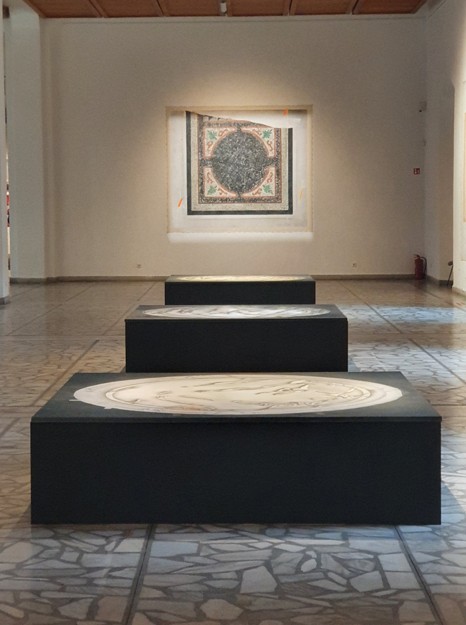
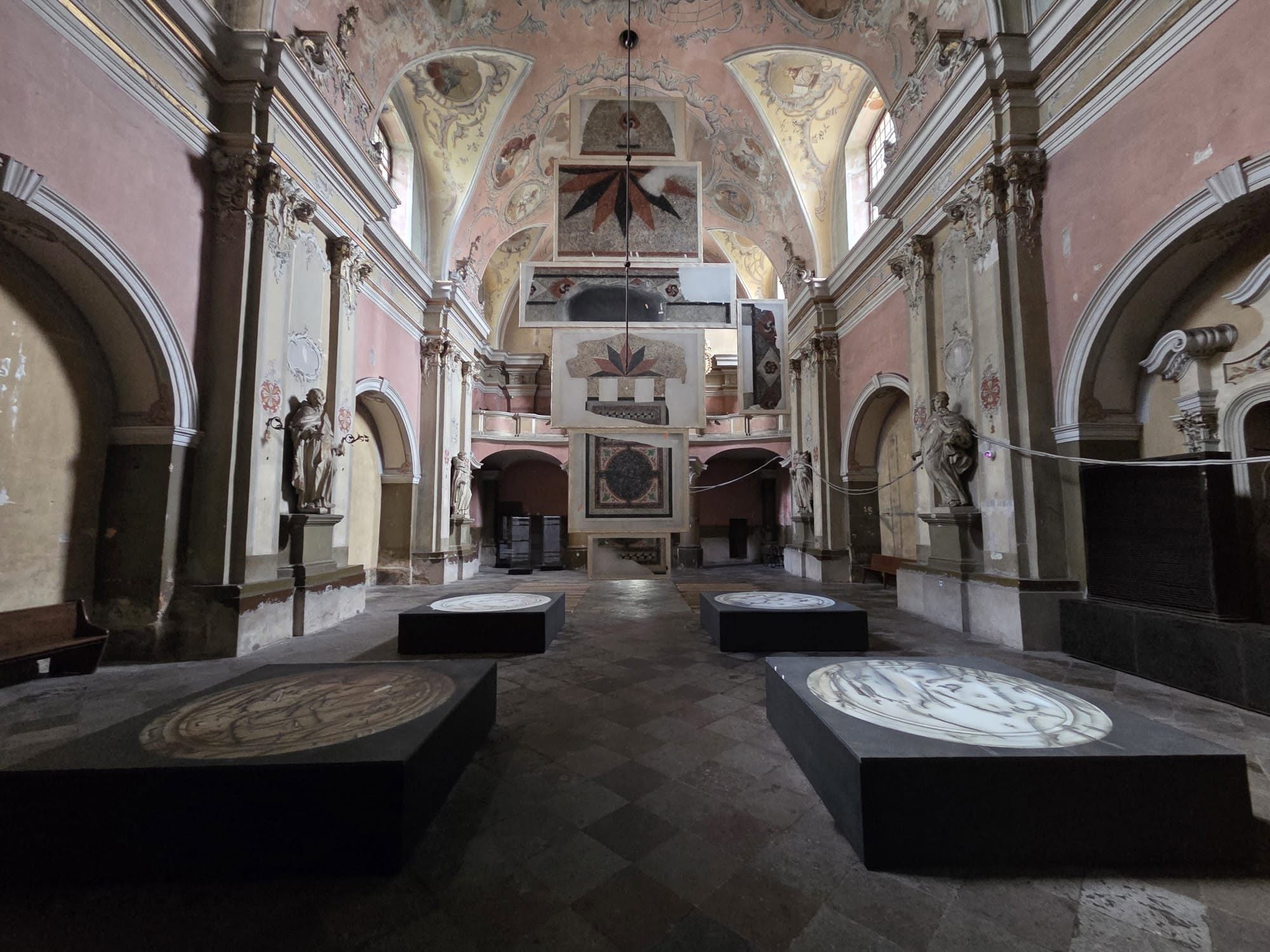
In 2026 Ridikaitė’s Great Synagogue paintings were shown in the exhibition nuėmimai | depositions, presented by the Church Heritage Museum in the Church of St George the Martyr (Šv. Jurgio bažnyčia) in Vilnius, a church closed to visitors for almost eighty years.
At the centre of the nave a large structure was suspended that combines the artist’s canvases – full-size paintings of the floor of the bimah and the mikveh, the bases of the columns and other fragments exposed in the excavation – “removed”, as it were, from the destroyed synagogue.
The choice of venue is deliberate. Since World War II, the church housed a book repository, including a significant portion of books from the Strashun Library that had been hidden by the Paper Brigade. In the Soviet period the church was used as a warehouse, and librarians secretly hid part of the Jewish written heritage there, including Torah scrolls. The exhibition imagines the floor of the synagogue, which once heard the Torah read aloud, following the scrolls to the place where they were kept. This made this space all the more appropriate for an exhibition of the floors of the Great Synagogue. The exhibition was curated by Violeta Indriūnienė, Rita Pauliukevičiūtė and Laura Petrauskaitė.
St George’s Church was not chosen as the site for Ridikaitė’s installation by chance. Desecrated and converted into storage during the Soviet period, the space carries a renewed symbolic charge – as both a temporary refuge and a silent witness. When the sanctuary became a depository of the so-called Book Palace, dedicated librarians secretly preserved there part of the Jewish written heritage, including Torah scrolls. In the artist’s imagination, the floor of the Great Synagogue – having absorbed the sound of the Torah read aloud countless times – follows the traces of these scrolls to the place where they were hidden, where their lingering presence can almost be sensed. The fan of the bimah echoes the stars of the presbytery. Contemporaries, as if of the same generation, meet and enter into dialogue: the floor of the destroyed synagogue and the devastated church.
— Violeta Indriūnienė, Rita Pauliukevičiūtė, Laura Petrauskaitė, Church Heritage Museum


Sources
The Photography of Jonas Kulikauskas
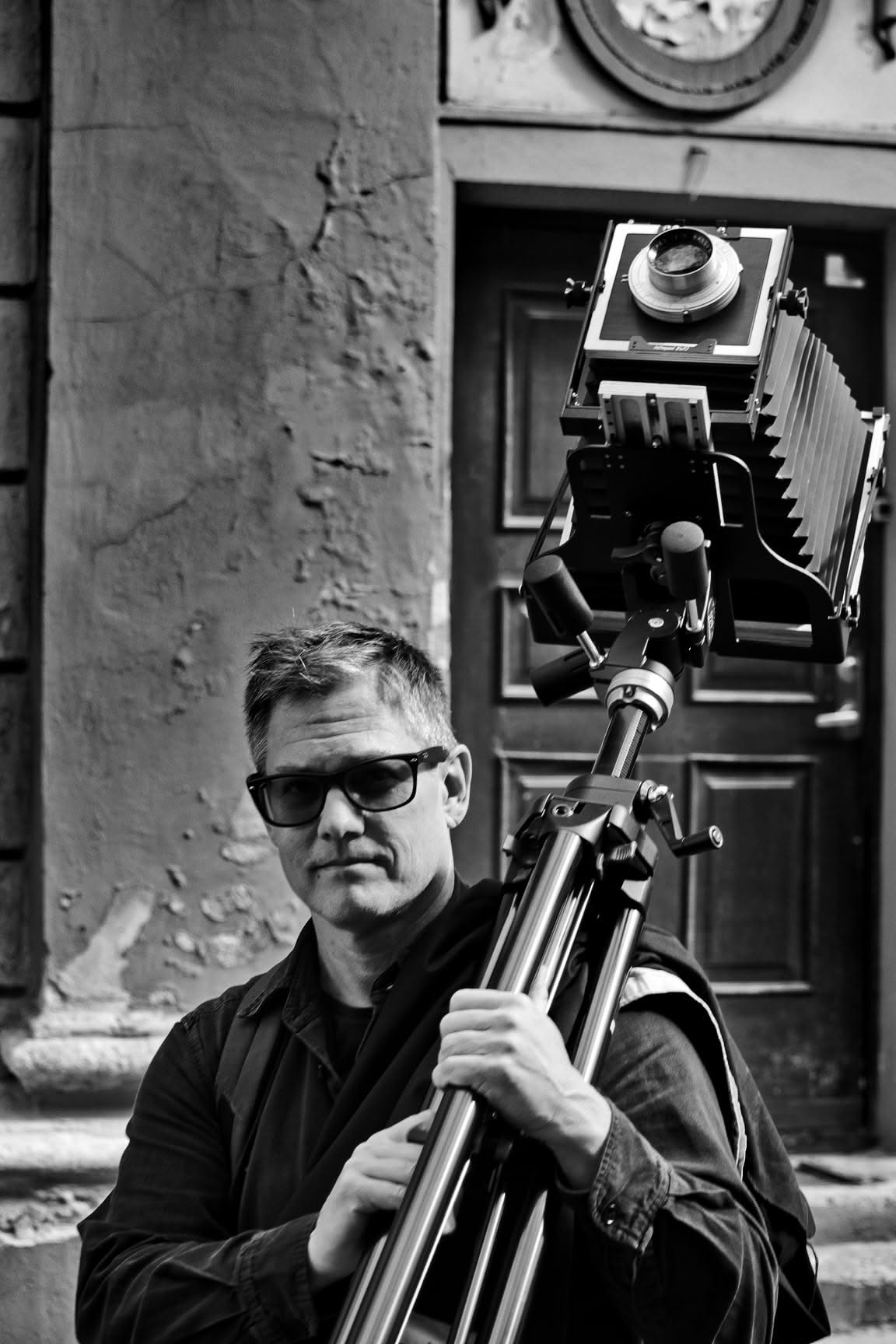
Jonas Kulikauskas is an interdisciplinary artist whose work draws on his American and Lithuanian roots. His research-based practice critically examines communities, traditions and institutions, and returns again and again to the themes of historical silence, identity and kindness. A Fulbright Scholar, award-winning author and alumnus of California State University, Los Angeles, his work is held in the permanent collections of the National Museum of American History (Smithsonian) and the M. K. Čiurlionis National Museum of Art, and he was a visiting lecturer at the ArtCenter College of Design in Pasadena from 2002 to 2020.
His parents fled Lithuania for Southern California, where Lithuanian was still spoken at home. With his brothers and sisters he attended a Lithuanian Catholic school at weekends, learning Lithuanian history and folk music. The Nazis were discussed there, but the Holocaust – the murder of the Jews of Vilnius – was not, a silence his parents also kept. Years later his own son met the same silence at the same school. That absence of knowledge, which Kulikauskas found deeply disturbing, lies at the heart of his work.
I Often Forget
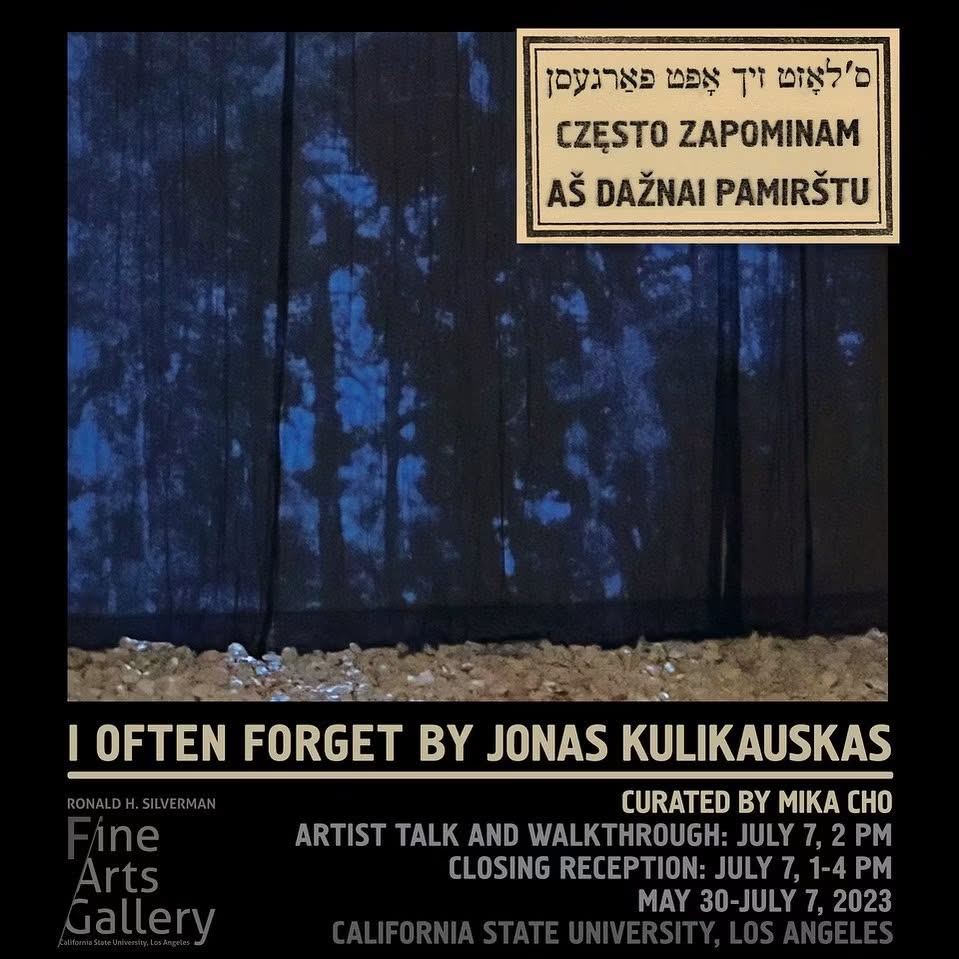
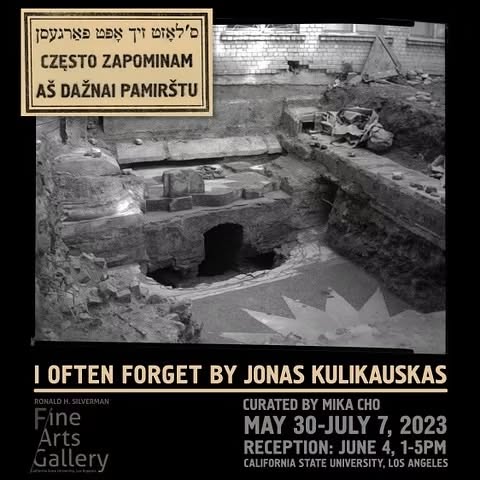
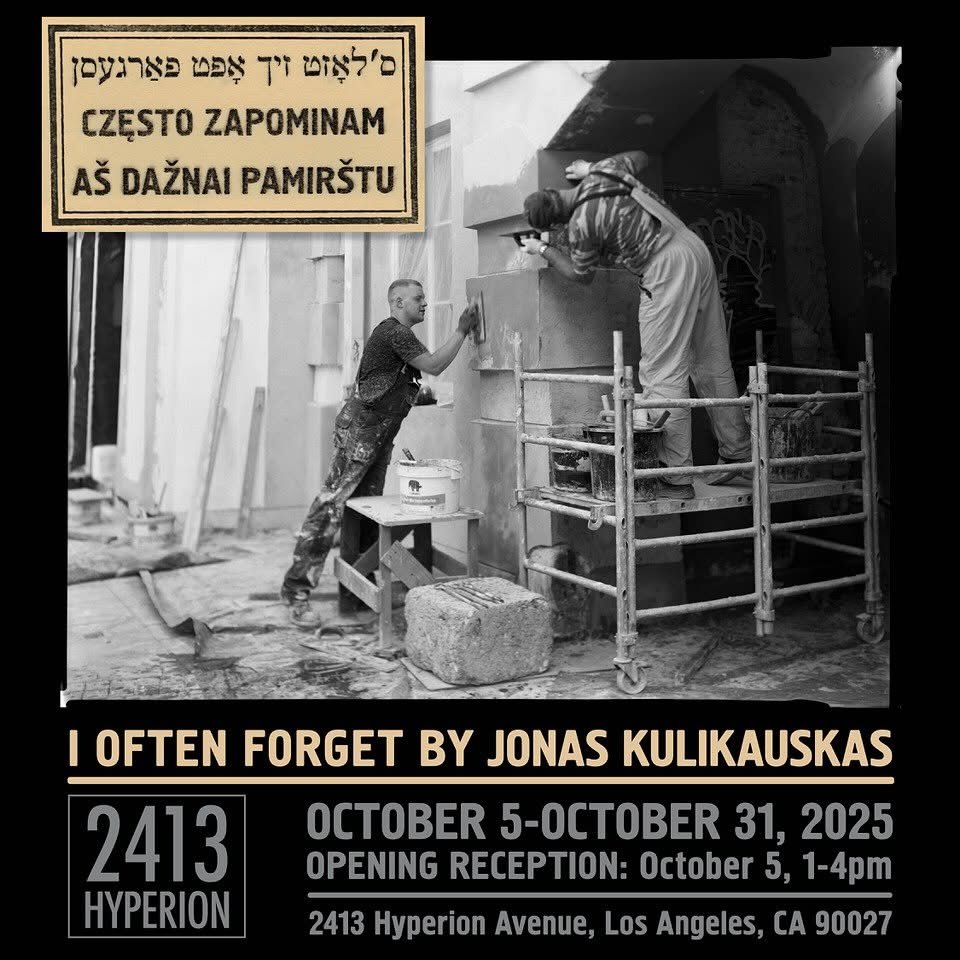
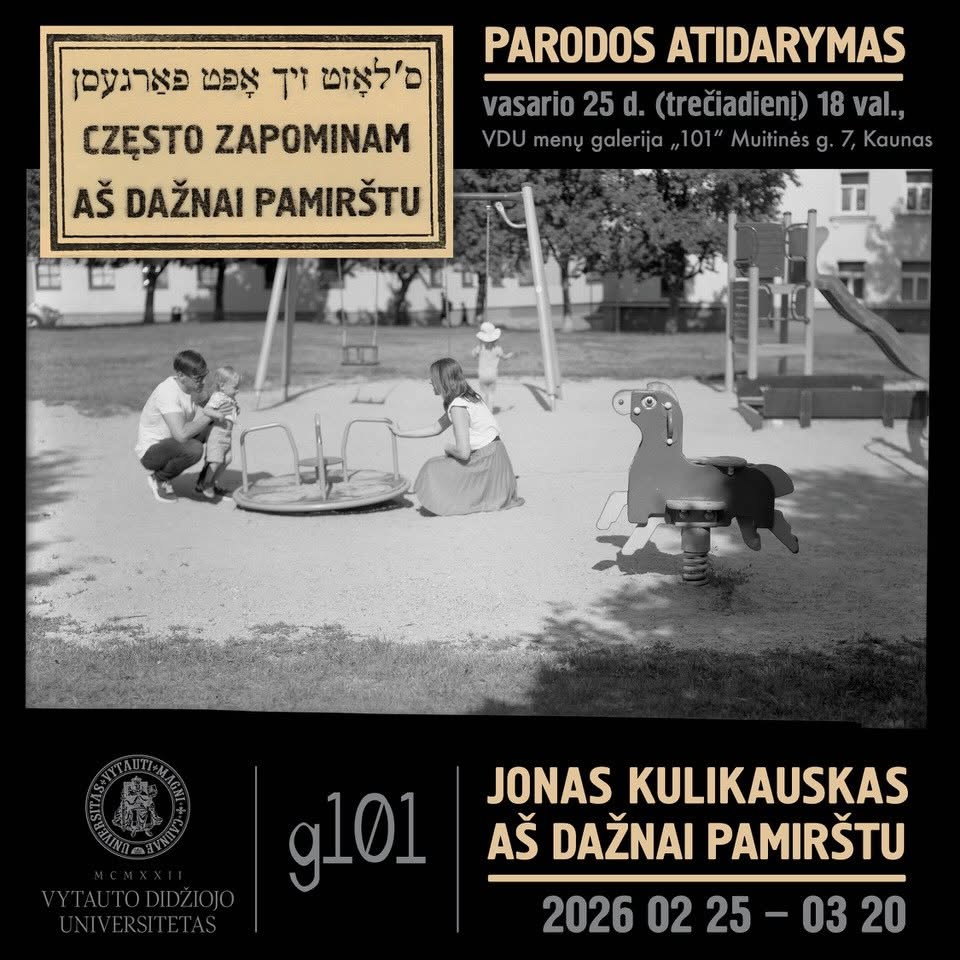
‘I Often Forget’ has been exhibited at: The Ronald H. Silverman Fine Arts Gallery, Los Angeles – 2023; 2413 Hyperion, Los Angeles – 2025; The Martynas Mažvydas National Library of Lithuania, Vilnius – 2025; Vytautas Magnus University Art Gallery, Kaunas – 2026
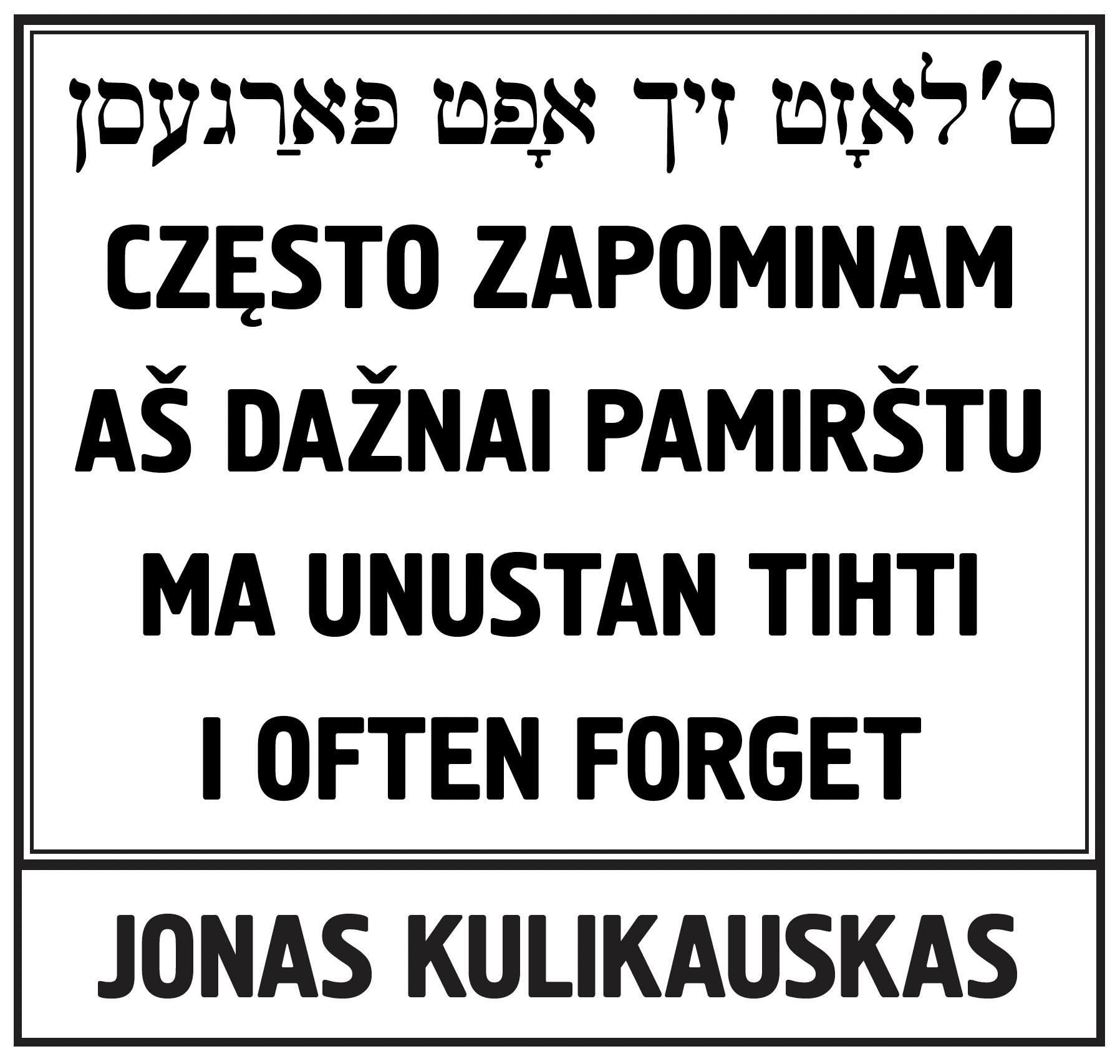
I Often Forget
Vilnius, the capital city of Lithuania, was once referred to as the “Jerusalem of the North,” where Litvaks (Lithuanian Jews) thrived for centuries. Before World War II, nearly a third of Vilnius residents were Jewish. During the Holocaust, more than 90% of the Jewish population in Lithuania perished.
My parents were World War II refugees who fled Lithuania and eventually settled in Southern California. Our family spoke Lithuanian at home, and my siblings and I spent every Saturday at a Lithuanian Catholic school. We learned Lithuanian history, language, songs, and folk dances, and we spent our summers at Lithuanian Scout Camp. I embraced my Lithuanian heritage and sent my son Matas to the same places. He had many of the same experiences that I had. Growing up in the American public school system, we learned about the Holocaust, the Final Solution, and concentration camps. At Lithuanian school, Nazi occupation was discussed, but the Holocaust was never mentioned. Looking back, I realize how much this disturbs me. It disturbs Matas too.
In January 2021, I arrived in Vilnius on a Fulbright scholarship to study the remaining Litvak community. Fastening a World War II-era lens to a newly constructed 8×10″ camera, I set out with black and white film to explore the streets of what used to be the Vilna Ghetto. Informed by historical diaries and testimonies, I walked the same cobblestone streets and passageways where more than 40,000 Jews were trapped before being systematically killed between 1941 and 1943. Much has changed. Today, their voices and stories are nearly lost, buried beneath layers of renovated facades, charming cafes, affluent boutiques, and buzzing tourist spots.
Upon my return to the U.S. in October of 2021, I reconnected with some of my American Lithuanian friends who could relate to my project. Their interest was inspired by the same lack of knowledge about the Holocaust in Lithuania. My sister Rima told me that, to her embarrassment, she first learned of it from a Jewish friend in her college days. Pondering it further, I visited my school library and found my Lithuanian twelfth-grade history textbook entitled, History of the Lithuanian Nation, Volume IV (Lithuanian Educational Council, Inc. in 1977). World War II is described over seventeen pages. The word “Žydai,” or Jews, is nowhere to be found. My brother Andrius pointed out that, in fact, Volume III includes information on Litvaks. A chapter simply entitled “Jews” contains only one sentence about the Holocaust.
– Jonas Kulikauskas
Exhibition panel, I Often Forget
In 2021 Kulikauskas arrived in Vilnius as a Fulbright scholar to study the remaining Jewish Litvak community, with additional support from the Puffin Foundation and an Emergency Grant from the Foundation for Contemporary Arts. He walked the streets of the former ghetto, his guidebook the diaries and testimonies of the more than 40,000 Jews who had been trapped there, most of whom were murdered by 1943. Before the war Vilnius – the “Jerusalem of the North” – was nearly a third Jewish; some 90% of its Jews perished in the Holocaust. Since then that history has been literally built over, and is rarely spoken of.
The ghetto he set out to record was created in the first months of the German occupation. On 6 September 1941 German and Lithuanian police began driving the Jews of Vilnius into two quarters on either side of Vokiečių Street, in the heart of the old Jewish quarter. Within a month most of the inhabitants of the smaller of the two ghettos had been murdered. According to the chronicler Herman Kruk, 29,000 people were crowded into an area that had previously housed fewer than 4,000. Forced to work for the Reich and living at bare subsistence under constant terror, the ghetto’s inmates still kept a theatre and a busy library, and took part in both passive and active resistance. Before the end of the war most had been killed.
Mounting a World War II-era lens on a large-format 8×10 camera, Kulikauskas photographed the ghetto as it is today. Despite their historic look, the pictures show the present – shops, cafés and buildings renovated into charming homes and tourist attractions – that has been quietly swallowing these stories. Each image is paired with a statement from the war years that belongs to the same place, now modernised or hidden, so that the layers of time embedded in everyday spaces become visible.
The photographs are shown as objects to be handled and read. Silver gelatin prints in clip folders on tables and white pedestals, and in files hung on the gallery walls, combine each present-day scene with a historical description of the location and the testimonies of survivors. Other prints are laid on the trays of construction sifters, a reminder that the modern city is built on the bones of the past. A fragile floor installation of white stones stands for the Jewish lives lost in the Holocaust, beside a gauzy curtain veiling an image of the forest of Ponar, where so many of the ghetto’s inhabitants were taken and shot, while a slide show of the images plays in a hushed alcove.
The exhibition confronts the Holocaust, historical omission, ethnic nationalism and cultural desecration, and the conflicts, resistance, survival, confusion and trauma that followed. It pays tribute to the Great Synagogue of Vilna – the oldest and most significant monument of Litvak Jewry – and memorialises the tens of thousands murdered at Ponar. Shown at a time of rising antisemitism and Holocaust denial, it recovers words and experiences that were close to being lost, and honours the courage, suffering, hopes and dreams of those who lived and died in the ghetto.
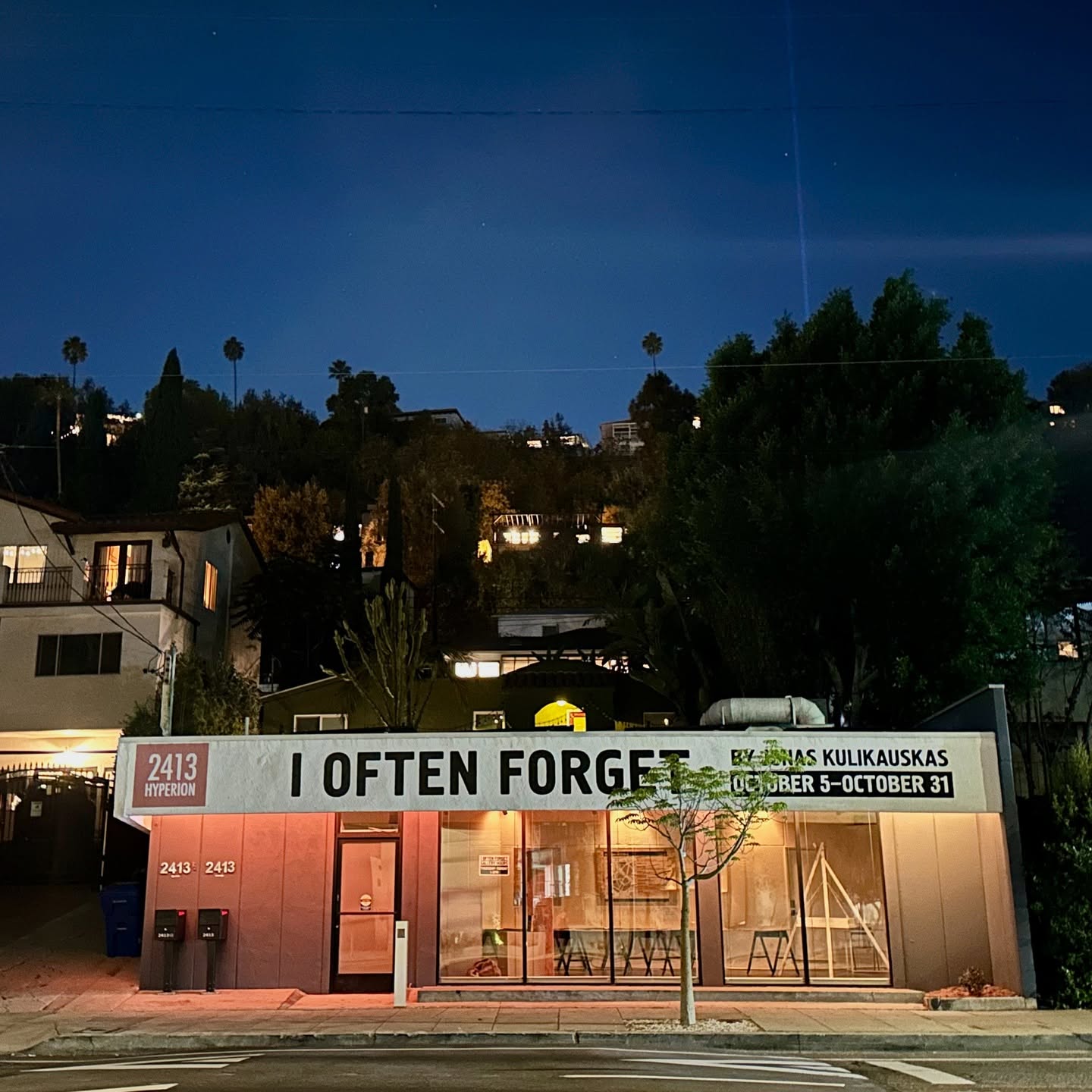
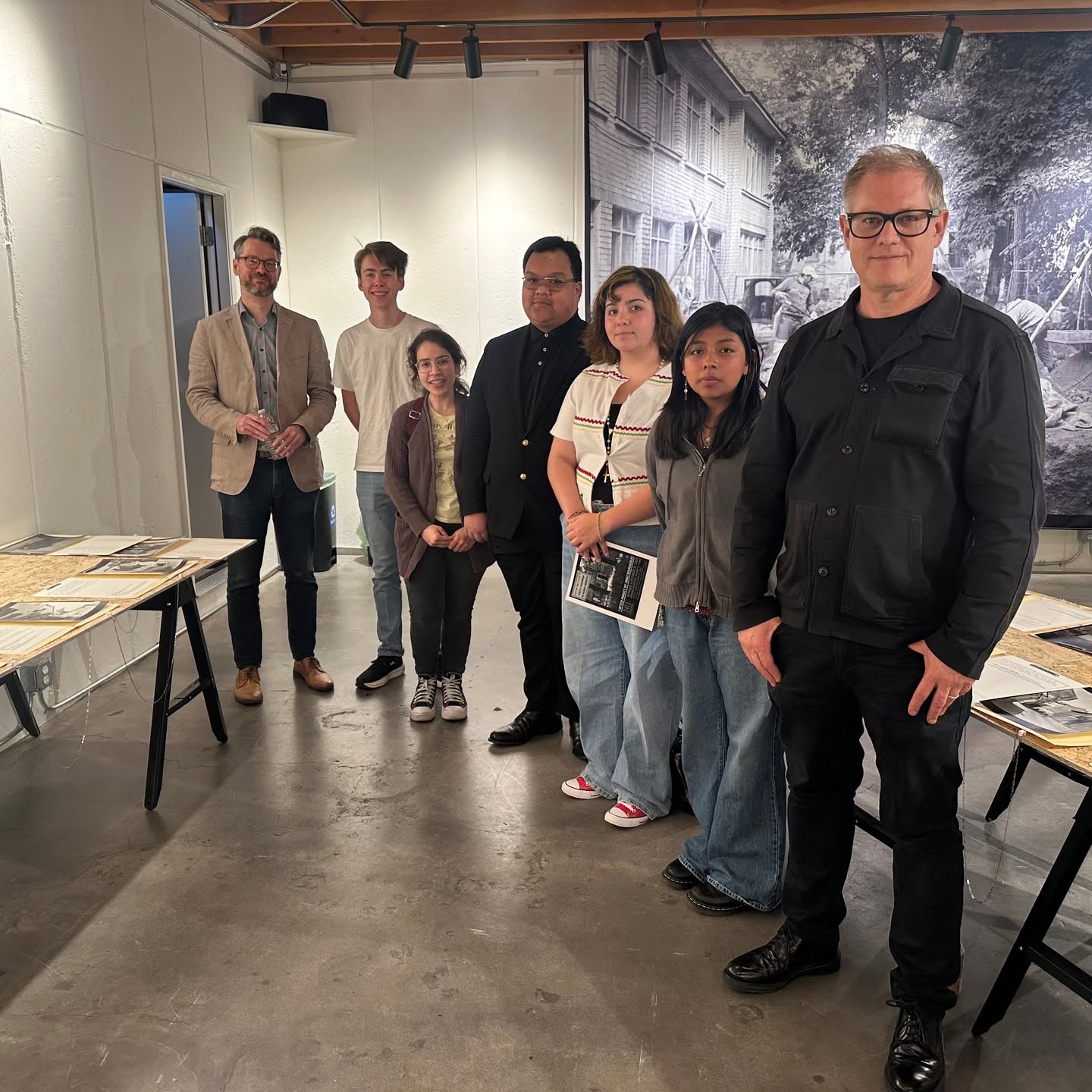
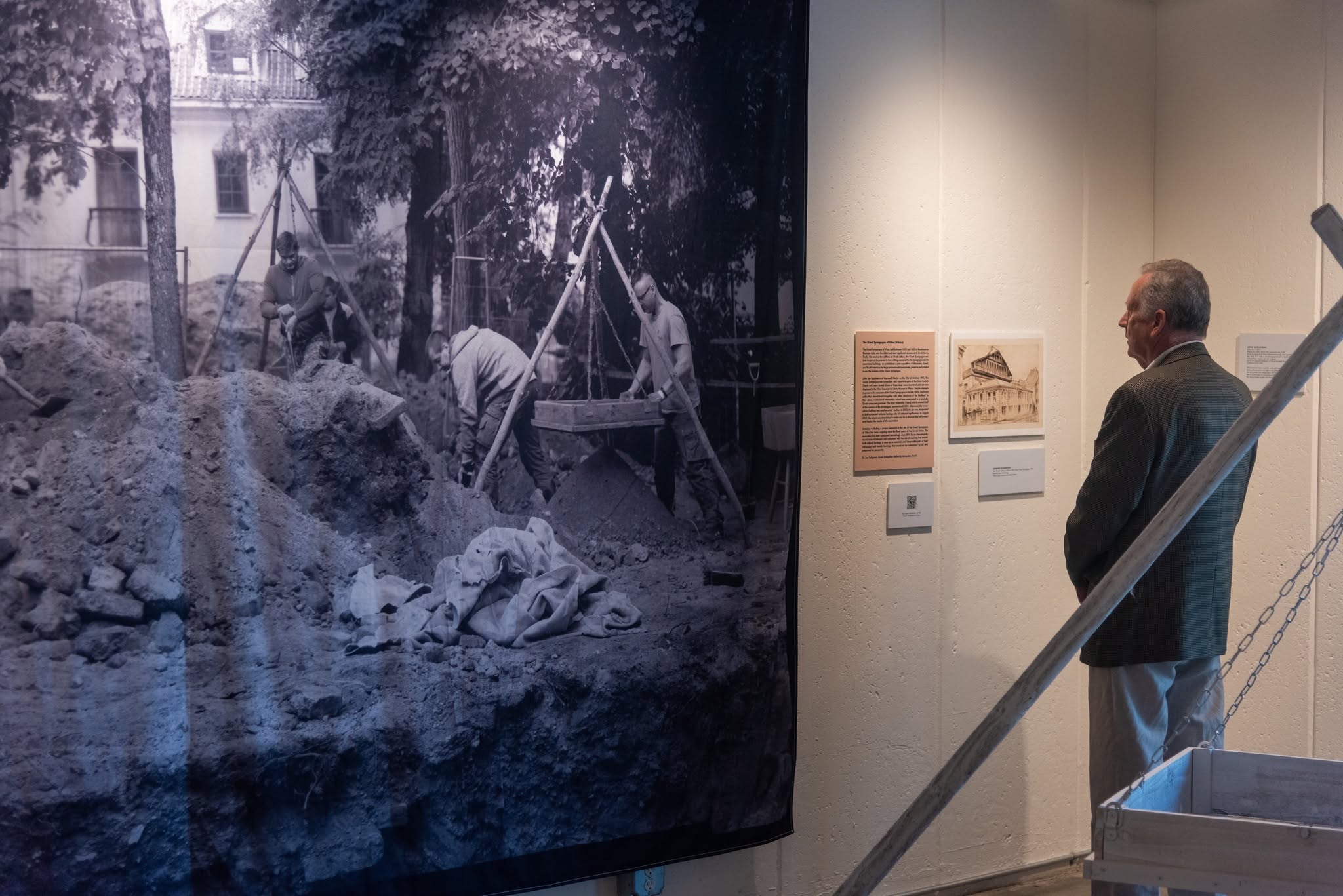
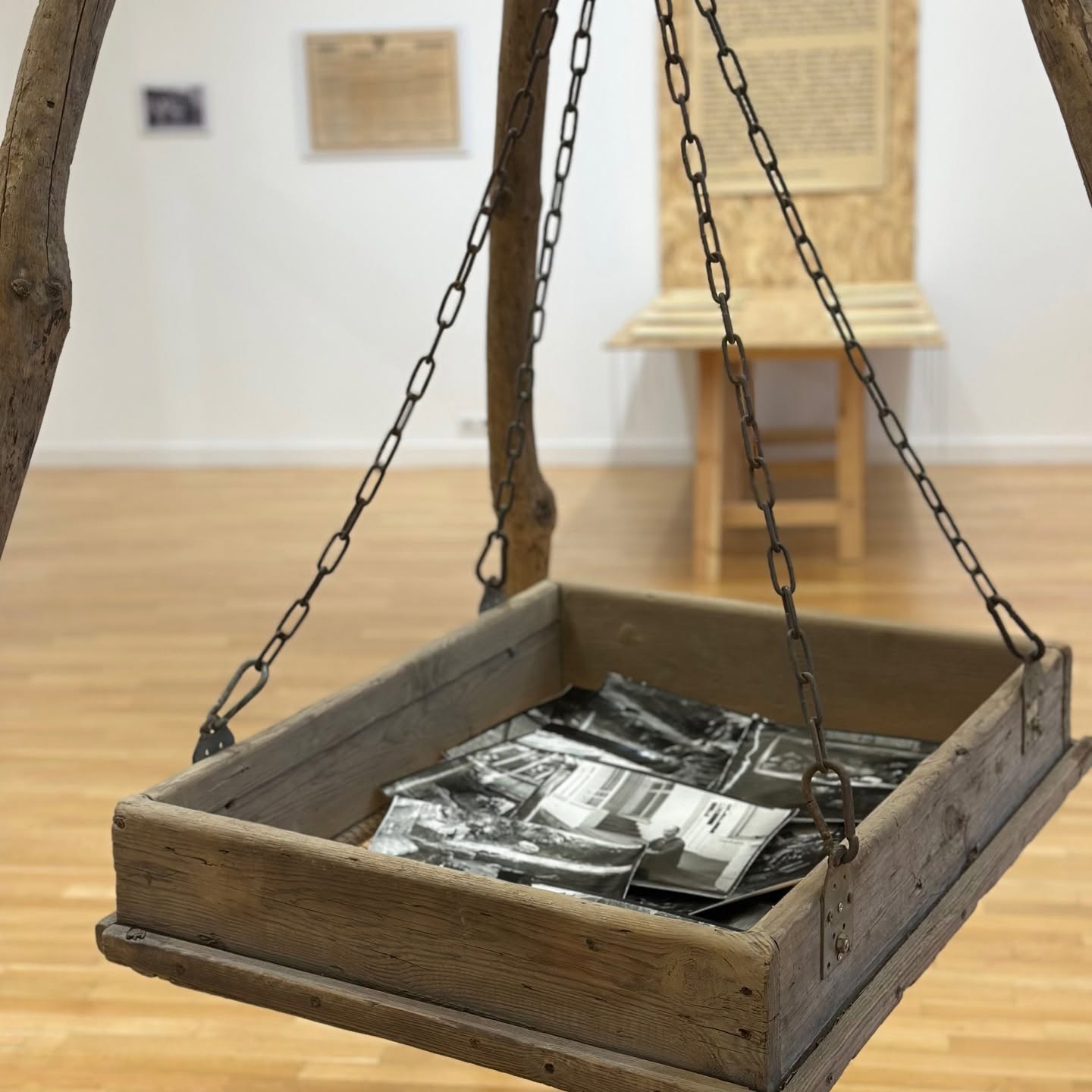
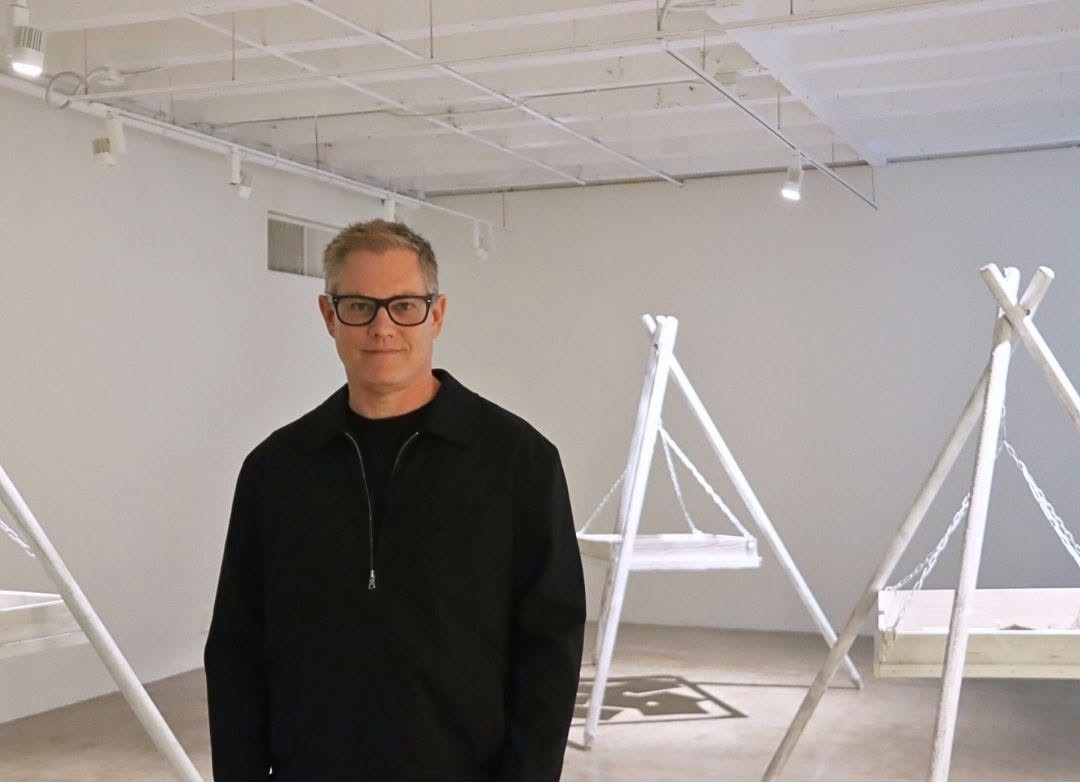
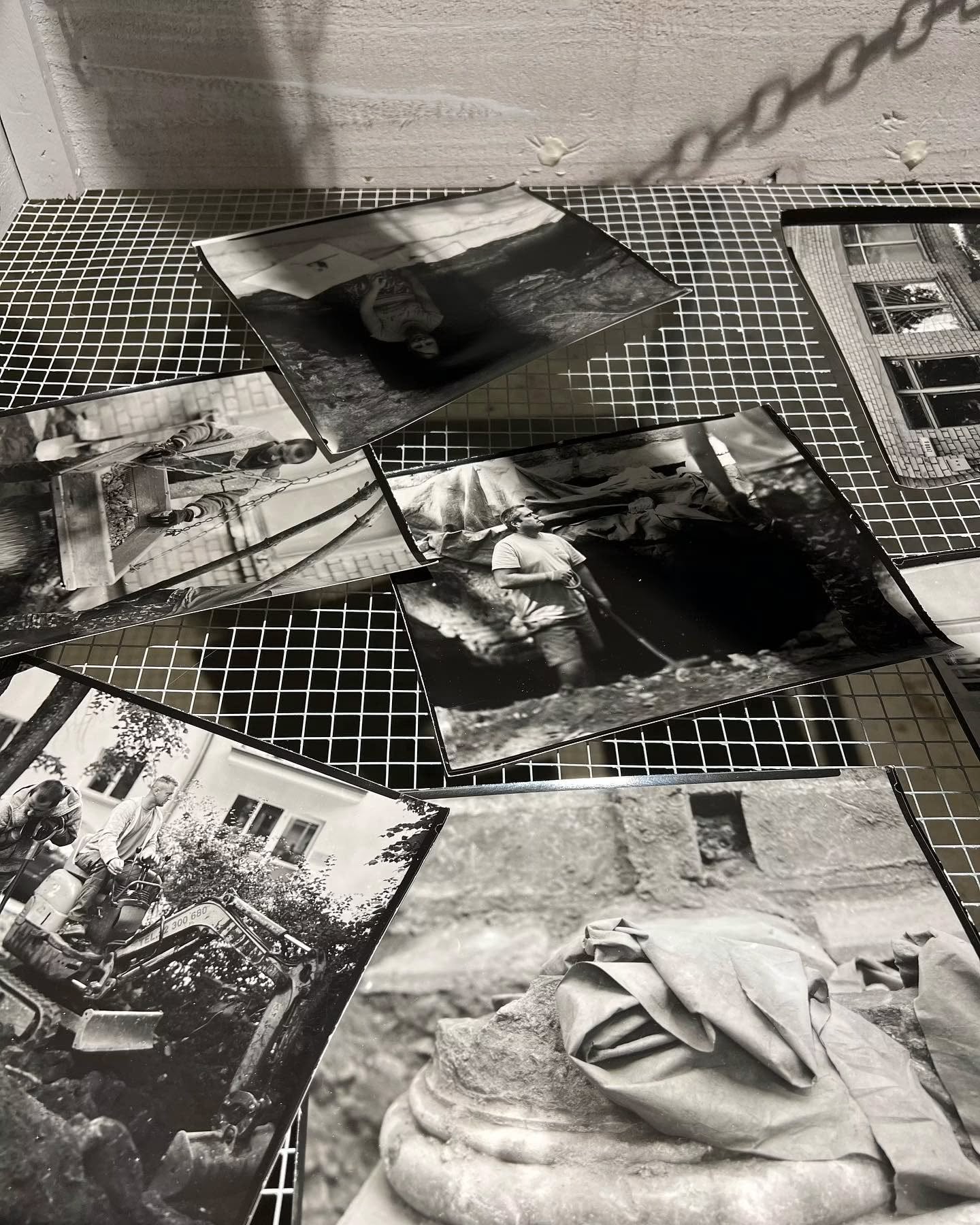
Scenes from the exhibition ‘I Often Forget’ in Los Angeles and Vilnius
Jonas Kulikauskas: Unforgetting
“Everything is the way it is because everything was the way it was.”
– Jonathan Safran Foer, Everything is Illuminated
Can a man forget what he never knew? Can a whole population? How long does it take for the multiplying chasms of time, distance, diaspora, and indifference to work their dark magic of erasure and codify history’s blind spots? Two generations? Three? Whose responsibility is it to keep track of what has occurred in the rooms we now occupy? Each of us ourselves? The civic committees who assign commemorative landmarks? The designers of school curriculums? Journalists? Maybe excavating the atrocities of the past is best left to those most adept at navigating paradoxes, consuming sadness, pulling apart fragile layers, and advancing the discourse with empathy. Maybe these matters are best left to artists.
Jonas Kulikauskas was inspired by his Lithuanian heritage and culture – more specifically, the glaring historical omissions in his education – to investigate the savage manifestations of the Holocaust in the once-vibrant city of Vilnius (aka Vilna, aka Wilno), where by 1941 tens of thousands of Jews had been herded into a Nazi-run Ghetto and systematically slaughtered. Never heard about it? Most have not – even those like Kulikauskas who have studied Lithuania. And although his resulting project contains foundational information remediating the historical record, in the end, the broader questions it asks get at a more universal aspect of human nature – our infinite capacity to remember, and our equal ability to forget.
Kulikauskas has chosen a classic pairing of testimonials and photography to create a restorative dossier layering the Vilnius Ghetto of 1941 with its 2021 reality – in an homage to the victims of the Ponary forest massacre, a metaphor-rich account of the archaeological excavation of the Great Vilnius Synagogue, and an exploration of the ghetto’s modern-day incarnation. Juxtaposed with moving, explicit, yet often matter of fact first-hand accounts of the invasion and decimation of the community, are new photographs taken by Kulikauskas, purposefully using black and white film through a WWII-era lens.
What did he expect to find there, when we went with his camera? Ghosts roaming at dusk, plaques to victims and heroes? Congregations in rueful mourning? No? What did he find instead? He found people going about their business – work, weddings, commerce, construction, whatever – do they have awareness of the bloodsoaked ground on which they trod? Did they forget? Or did they, too, never really know about the time the world as we knew it ended right below where they now lay their heads to sleep?
By pairing their ordinary lives with the extraordinary witness accounts of decades ago, Kulikauskas closes the loop of past and present in a way that makes it clear, as Faulkner might say, the past is not dead, it’s not even the past. Will I Often Forget help us to remember? Will we remember in time to stop the world from ending again, today, like it has so many times before? If we’re to have a chance, we must first learn the history.
– Shana Nys Dambrot, Los Angeles, 2023
Exhibition panel, I Often Forget
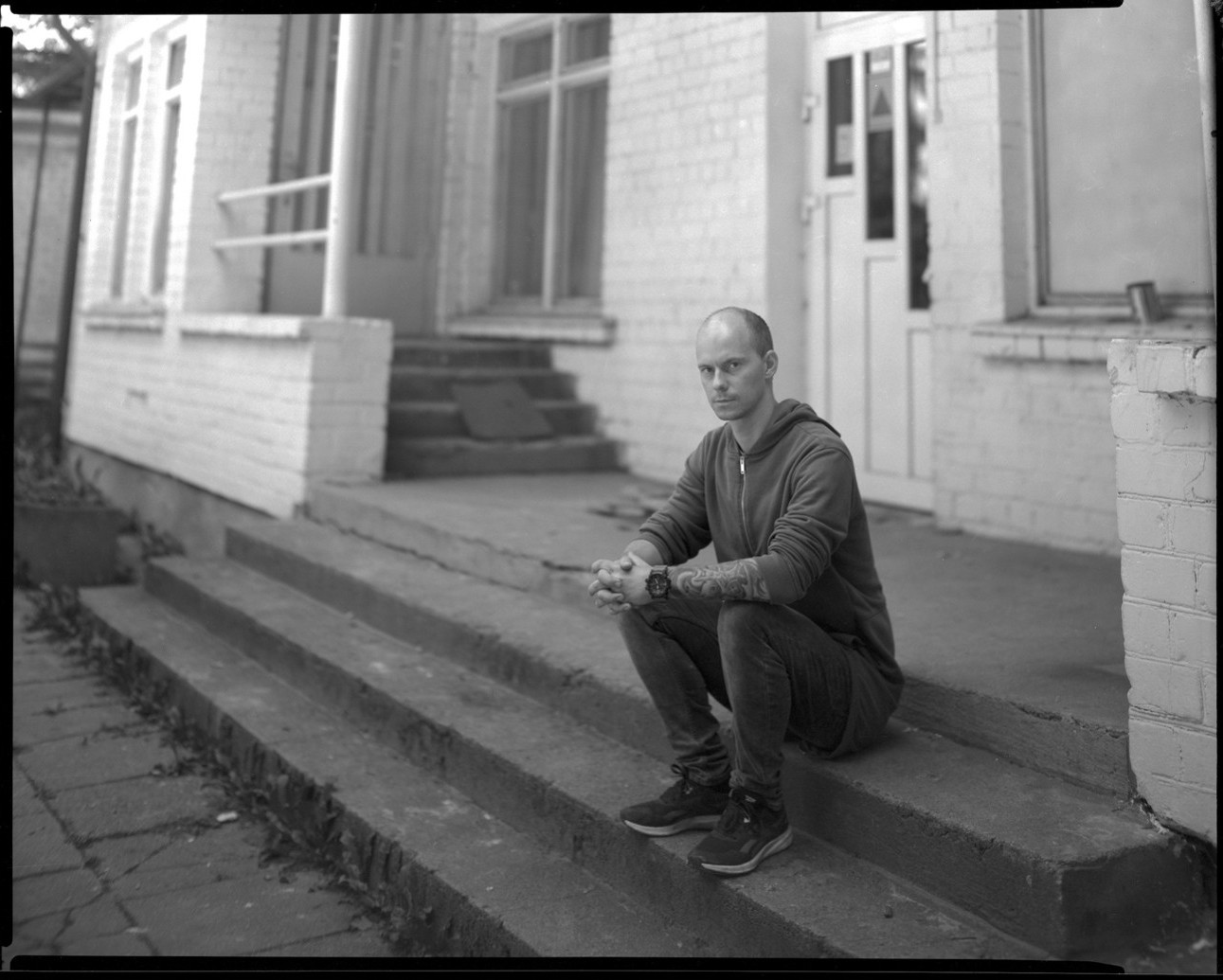
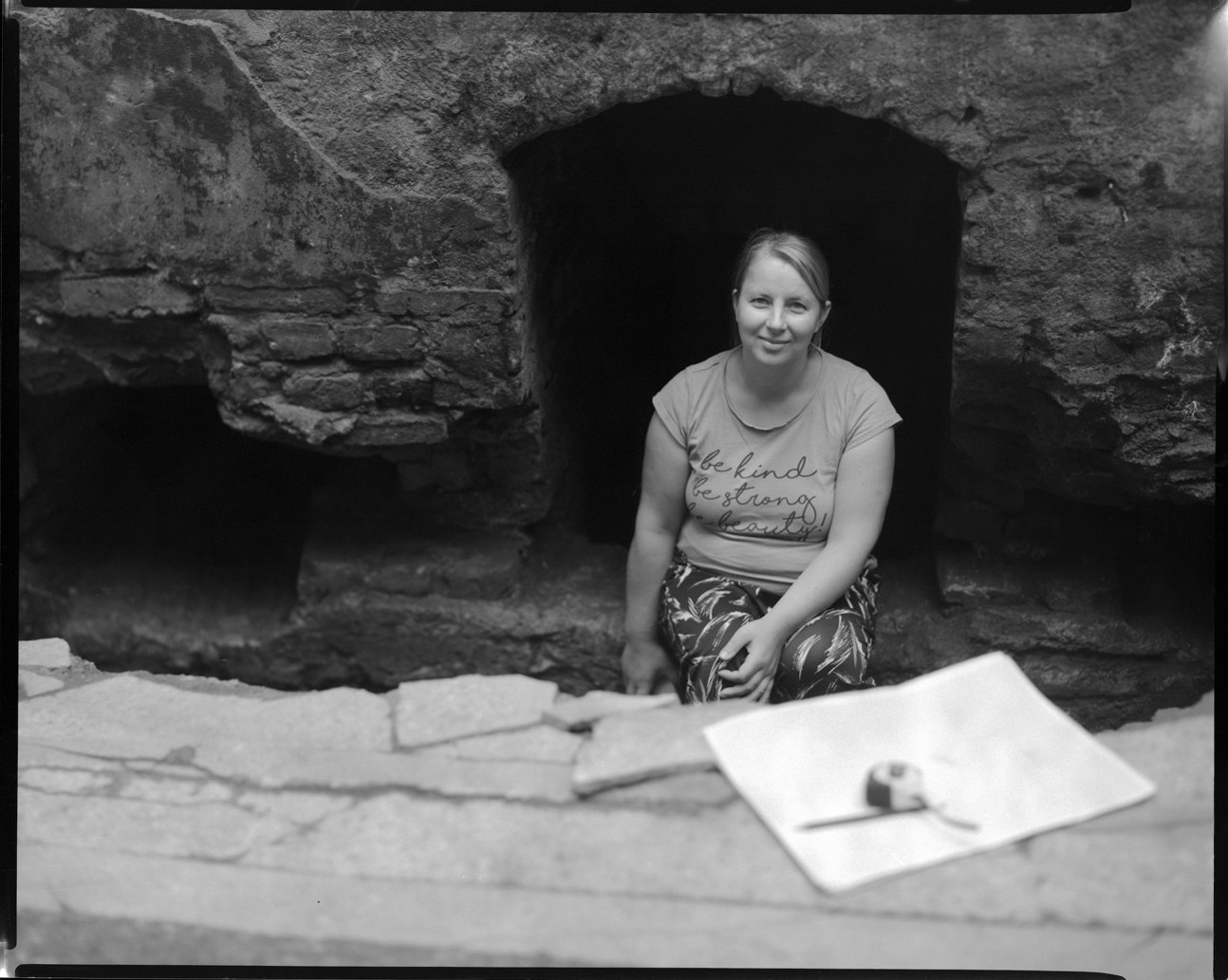
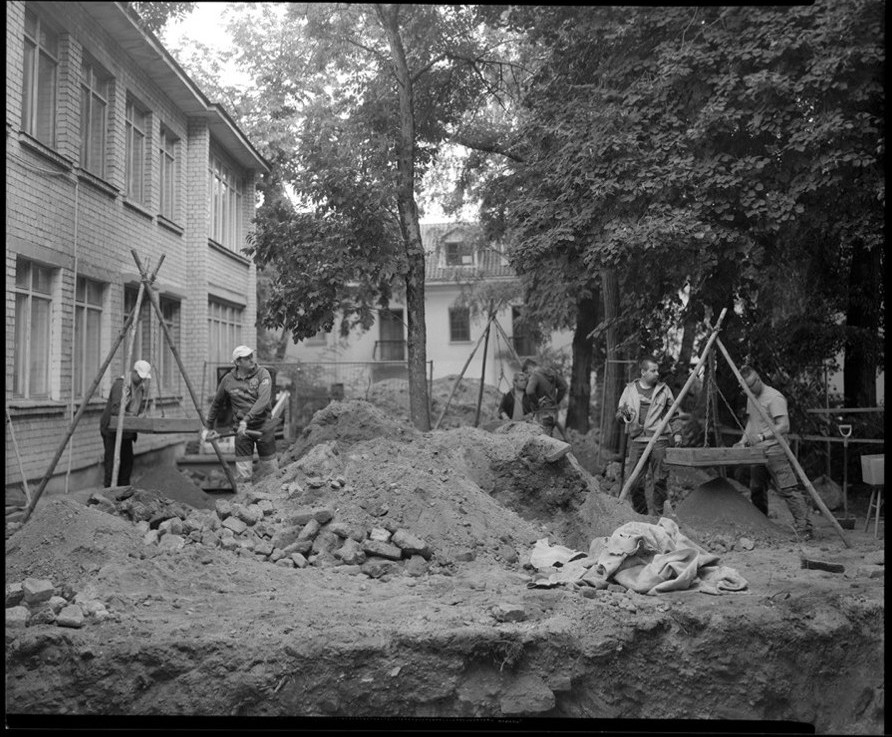
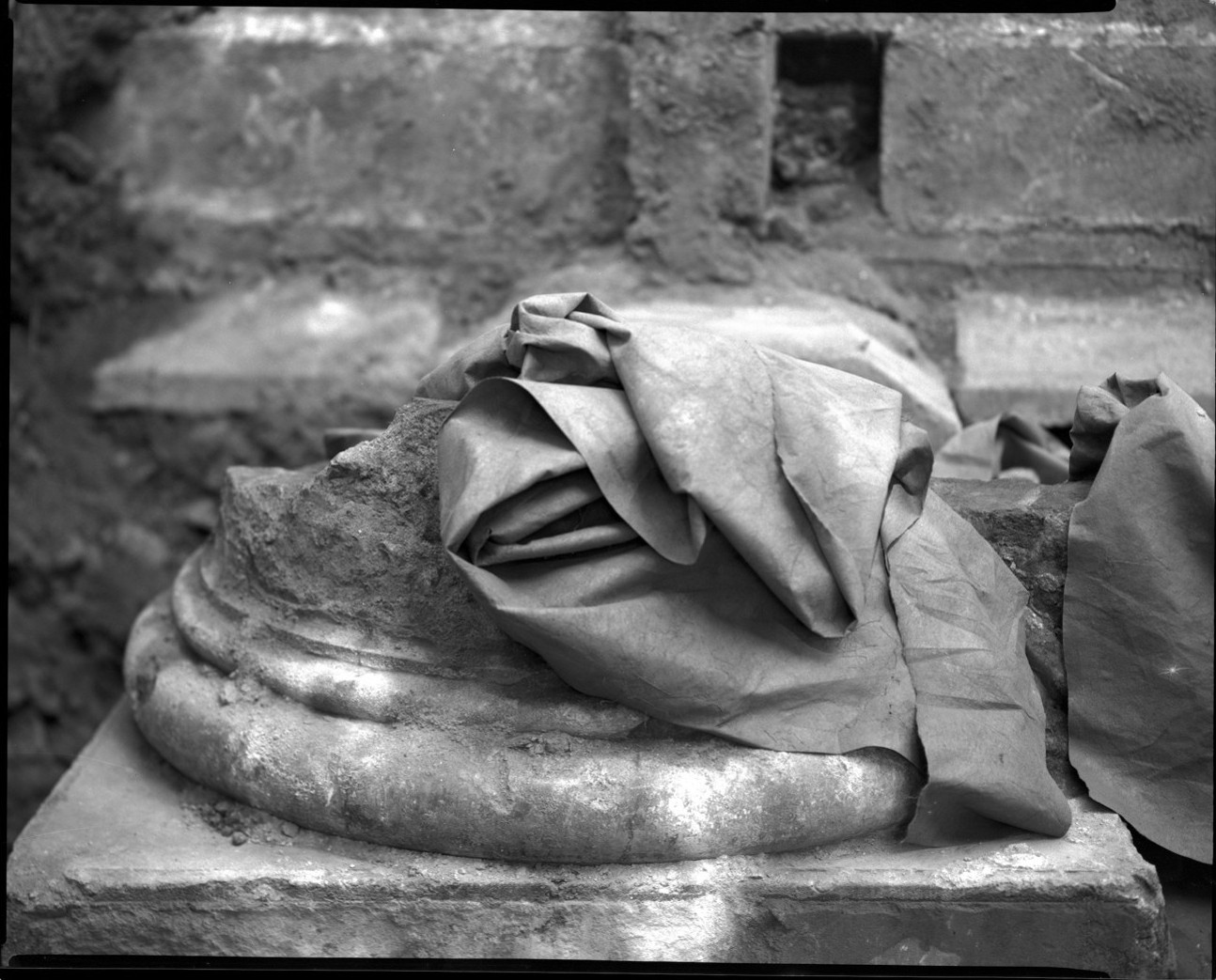
Photographs of the excavation of the Great Synagogue of Vilna from the exhibition ‘I Often Forget’ (All images © Jonas Kulikauskas)
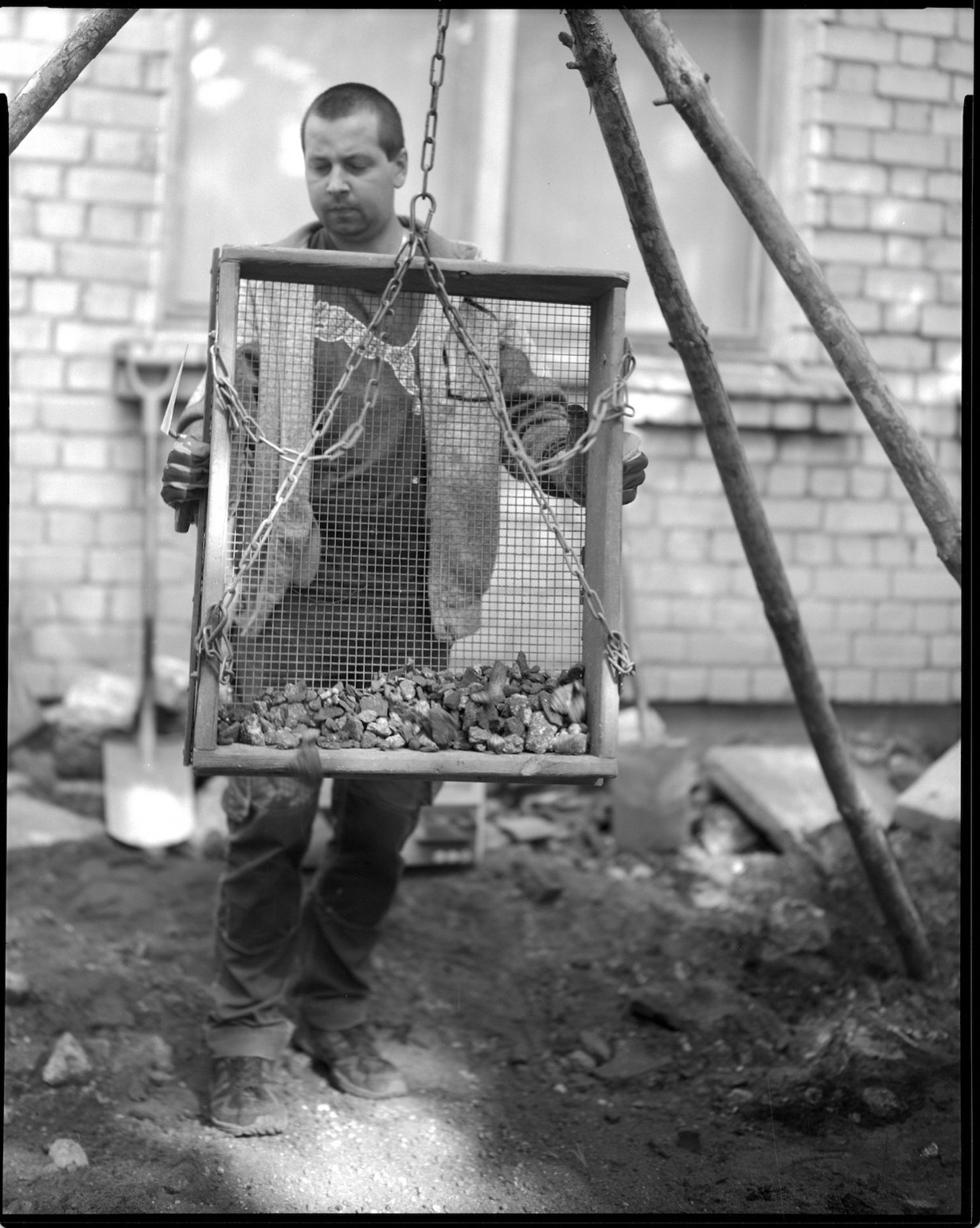
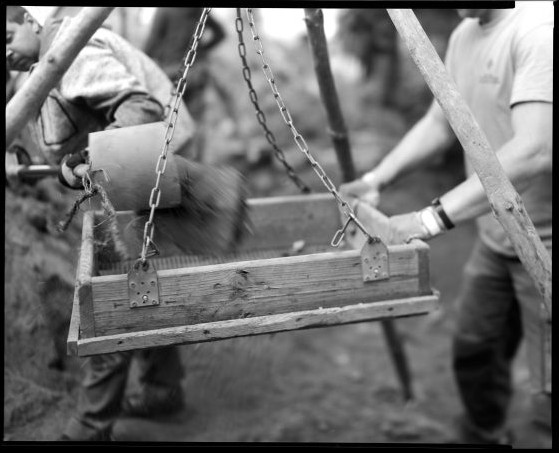
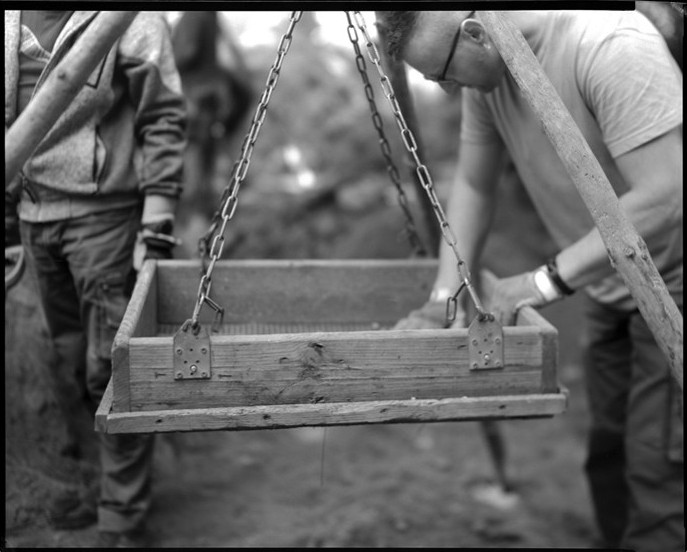
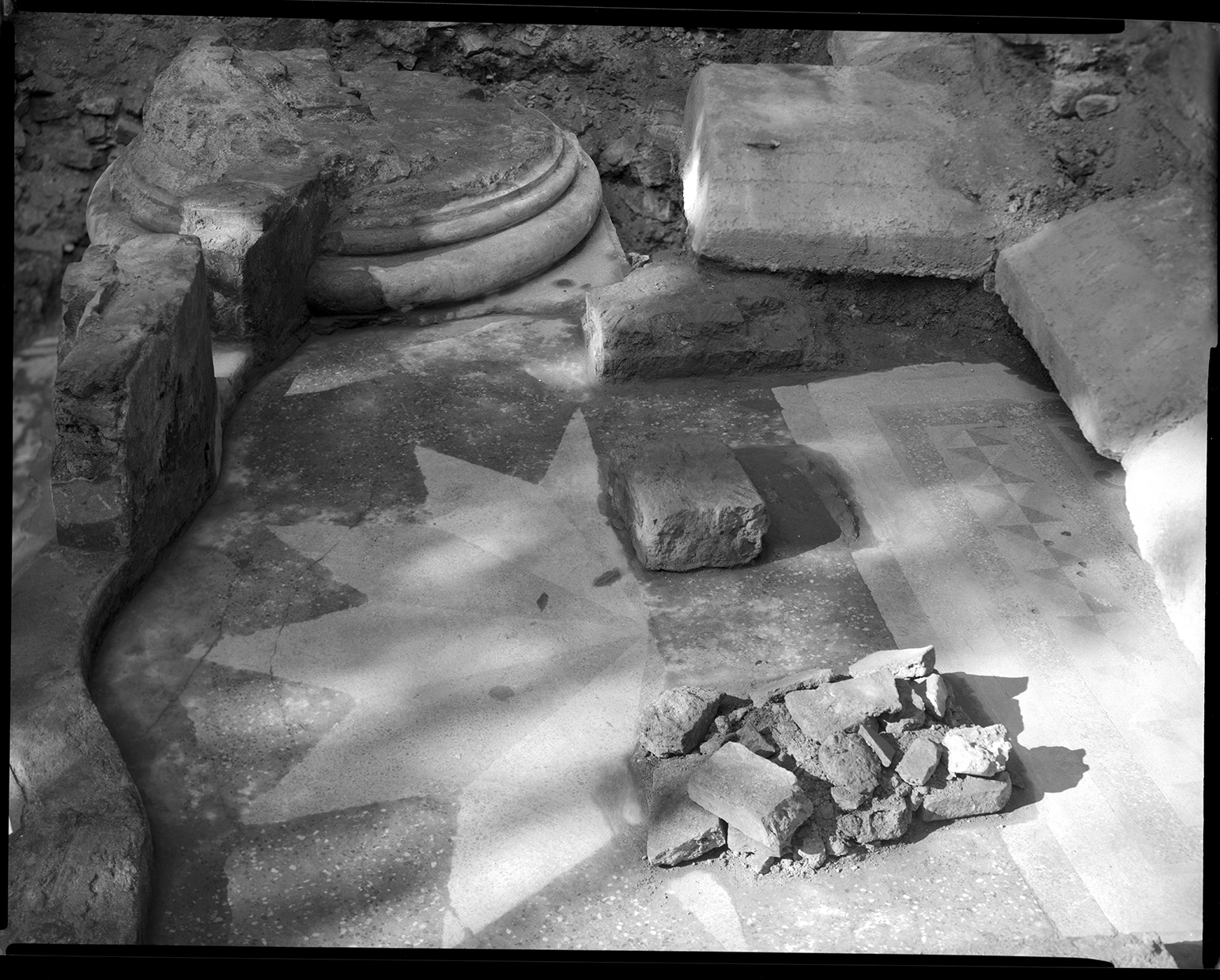
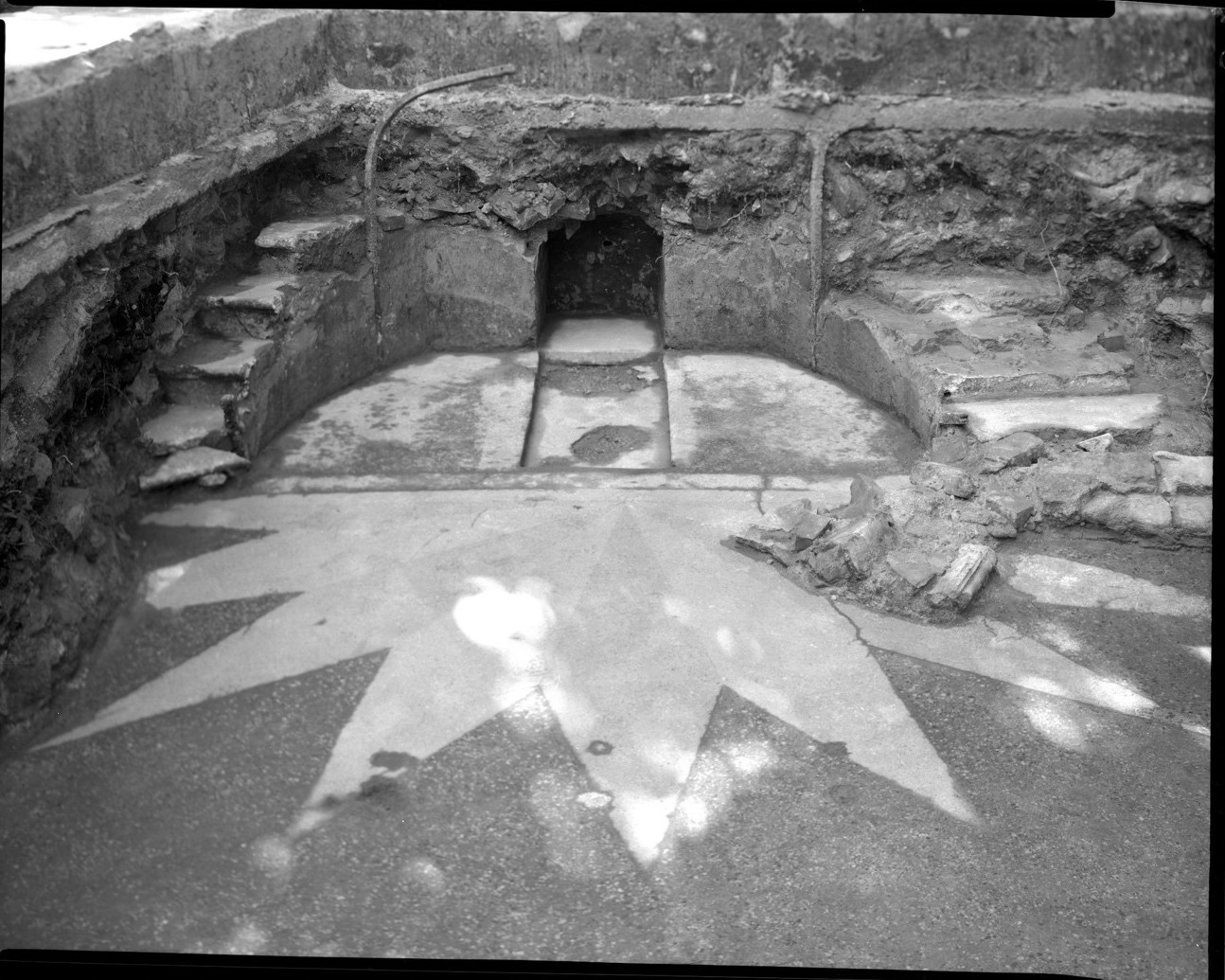
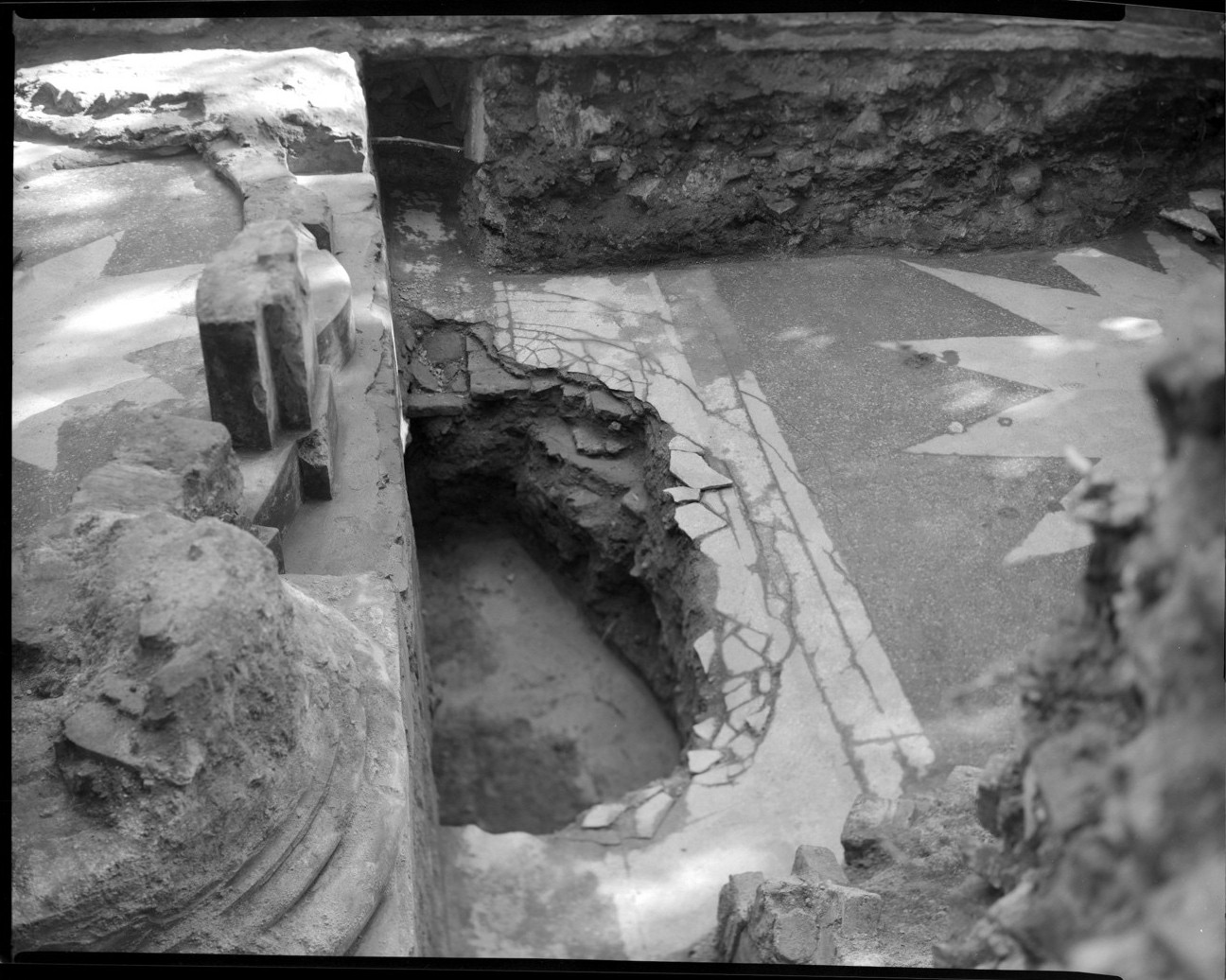
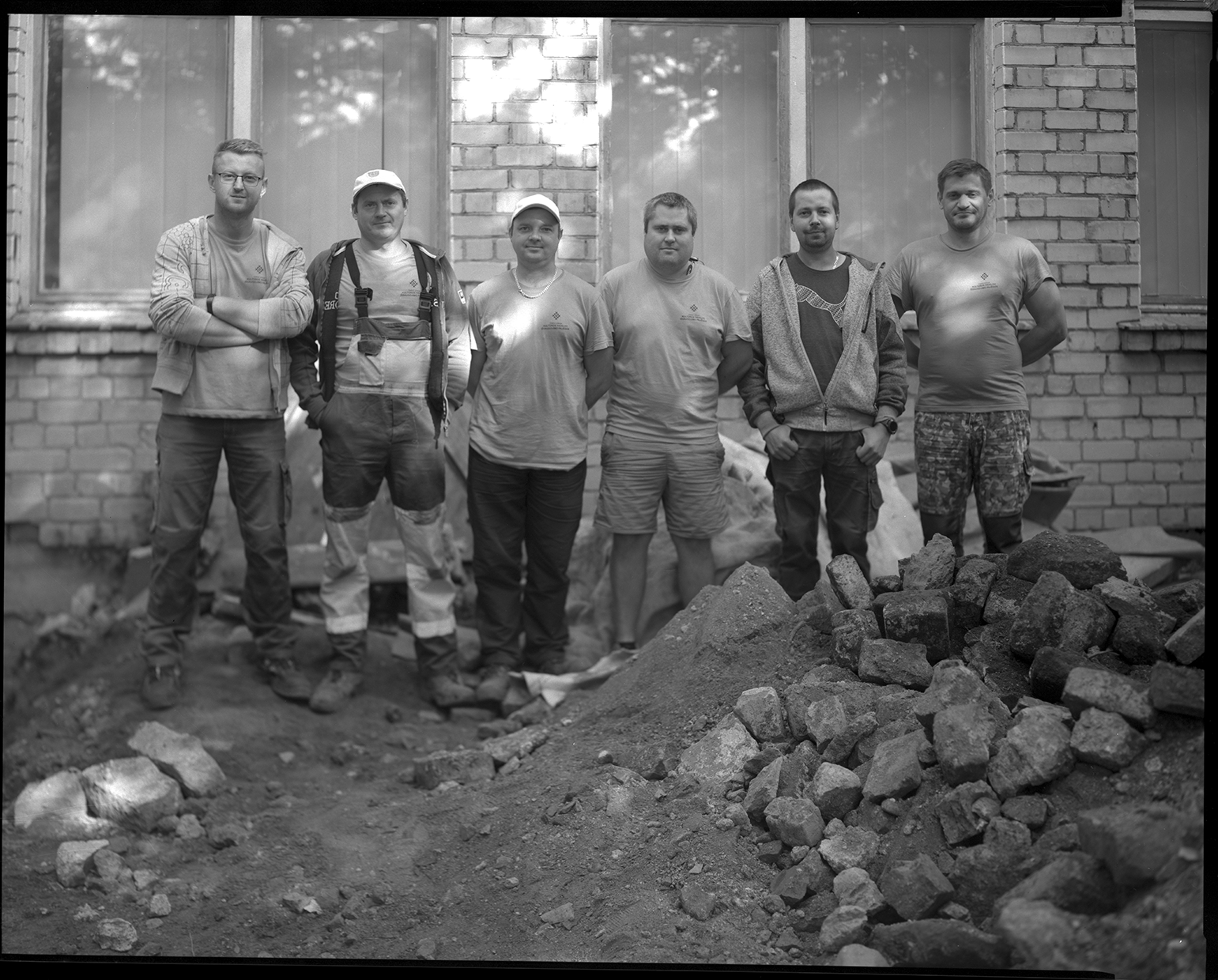
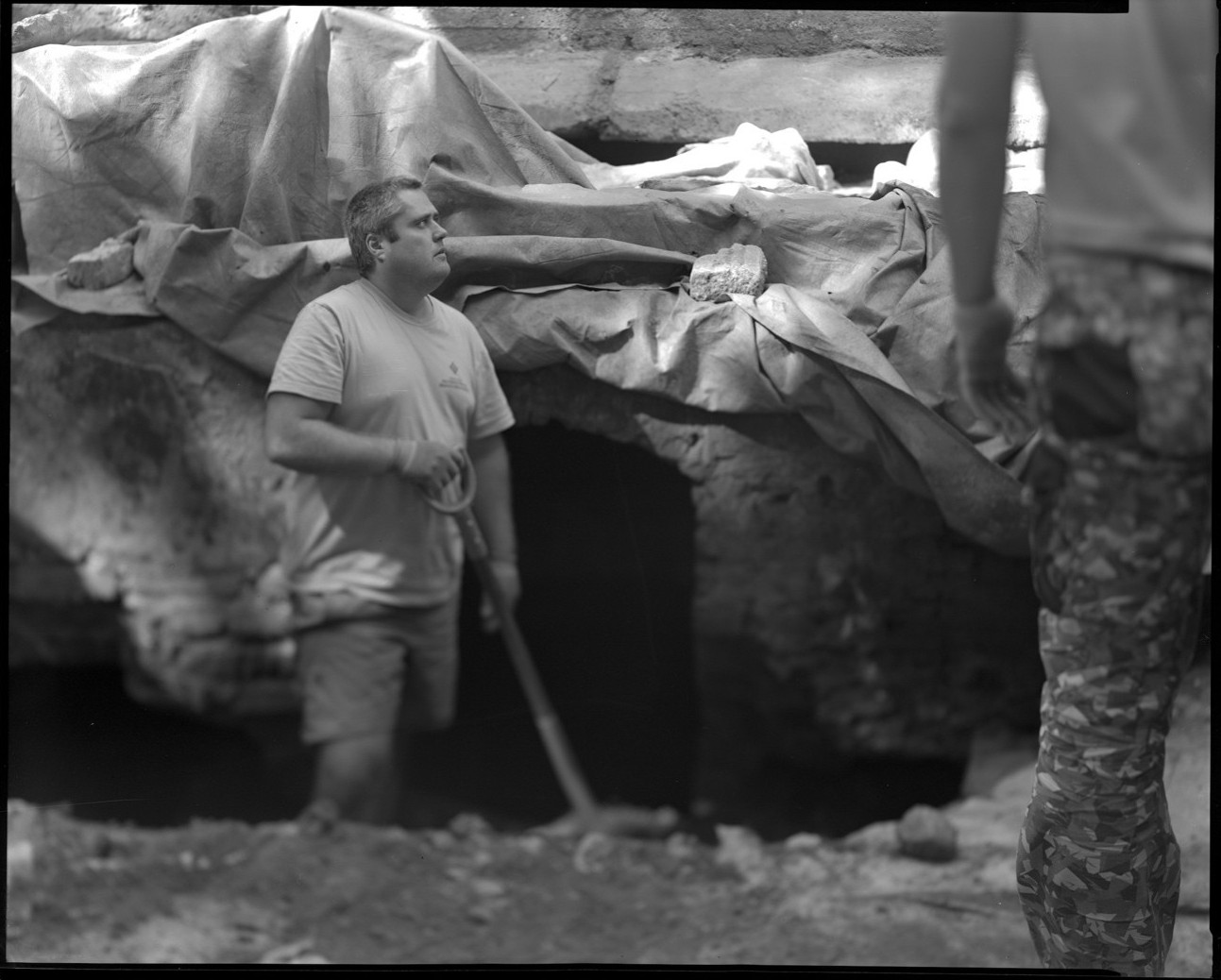
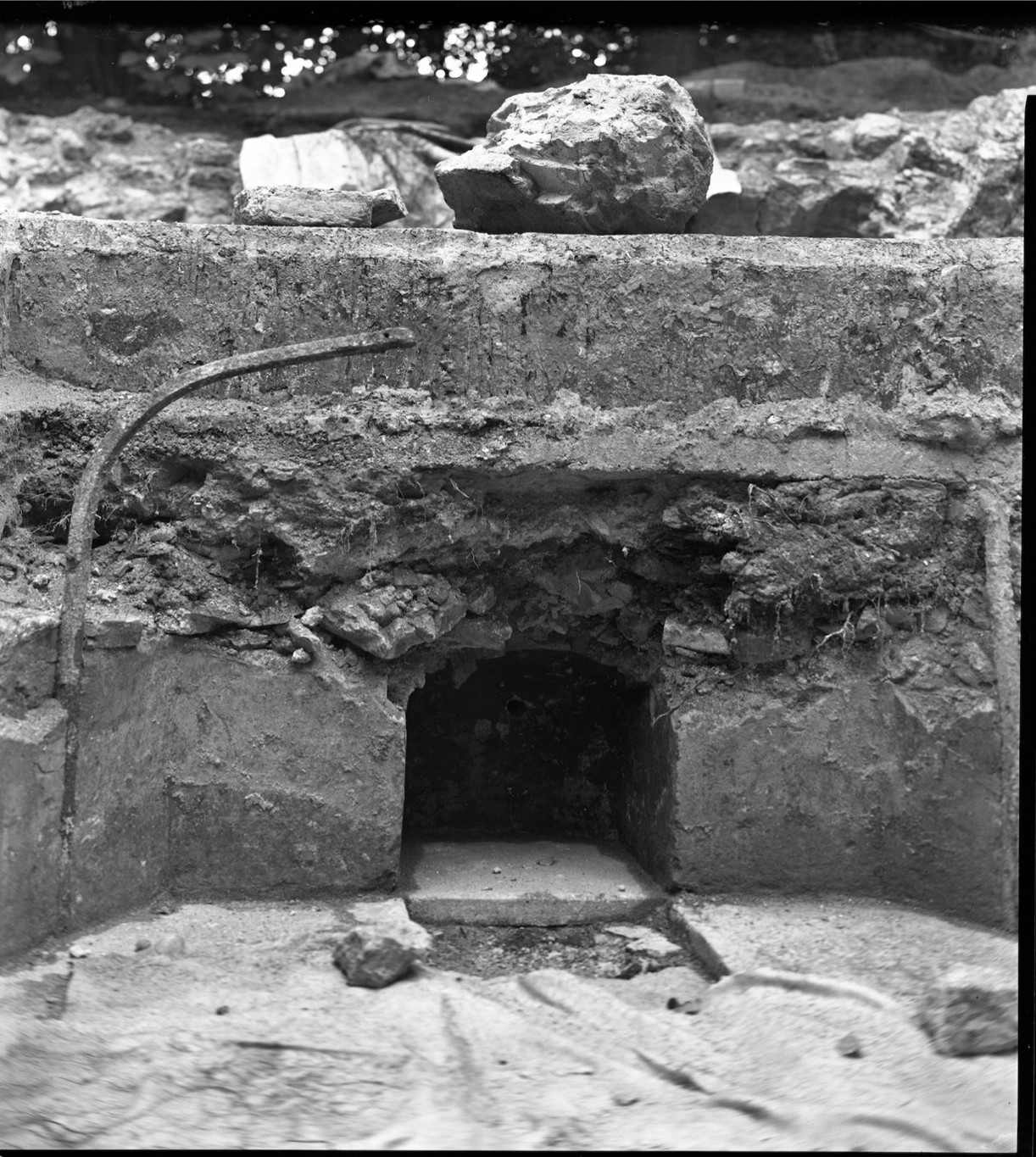
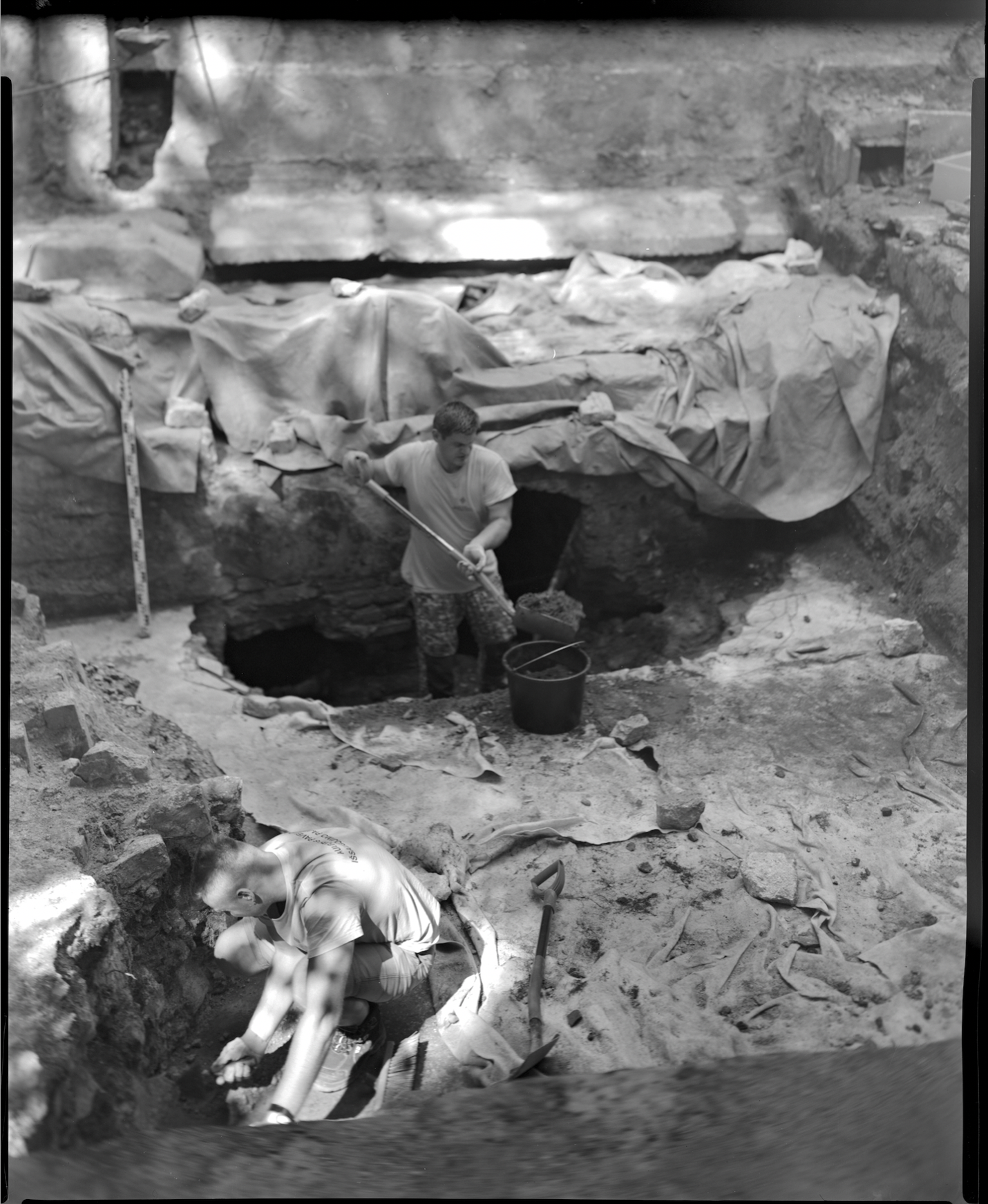
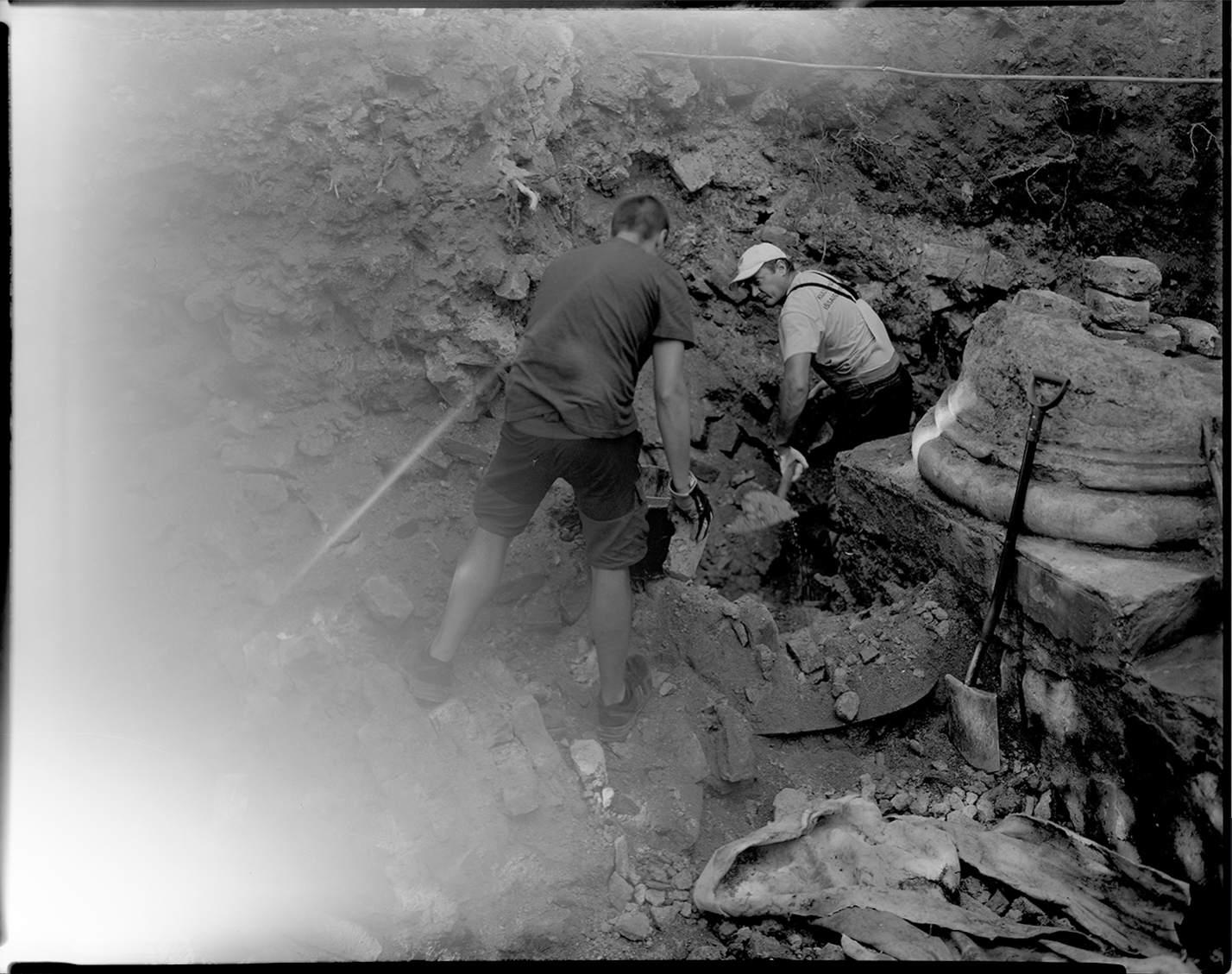
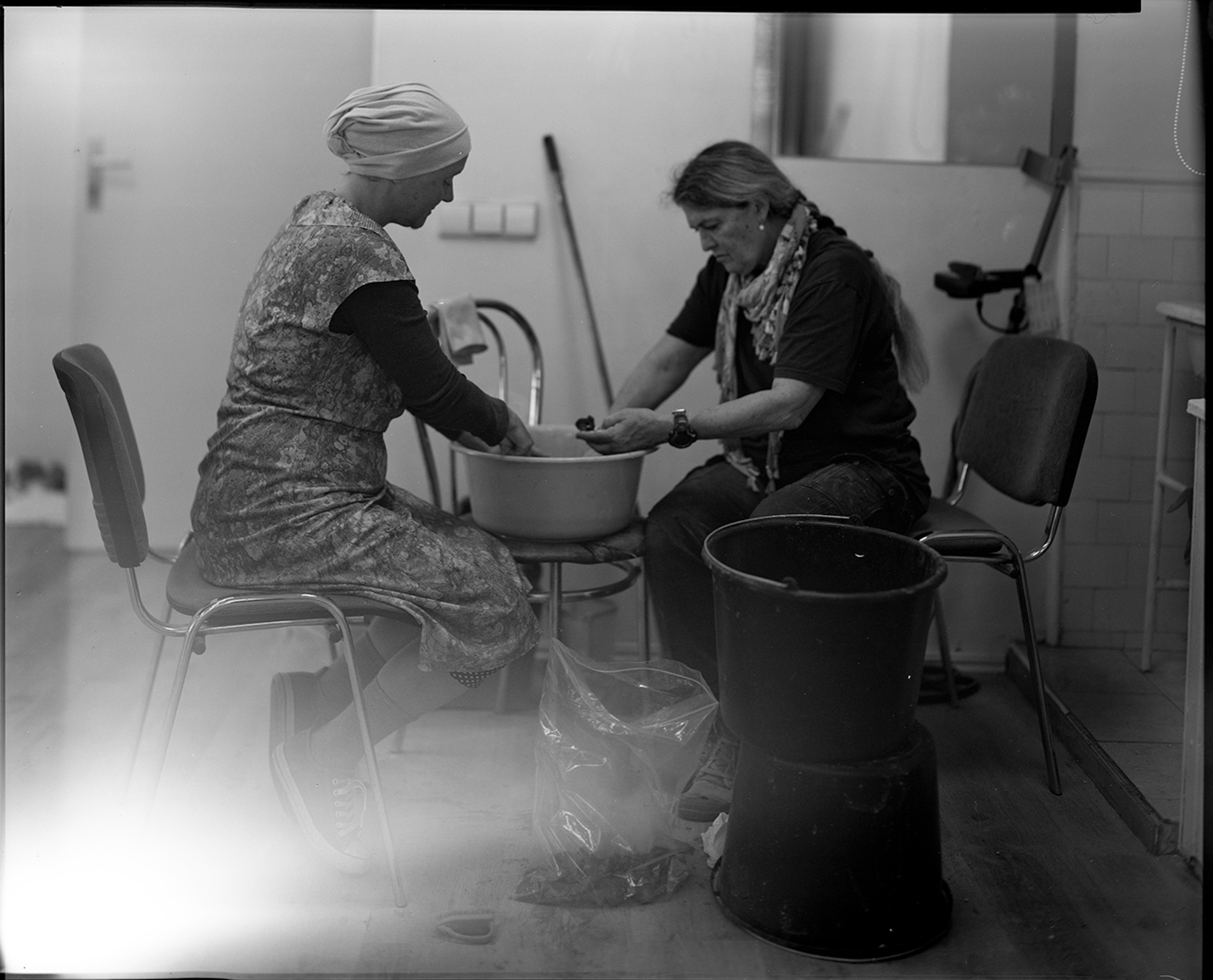
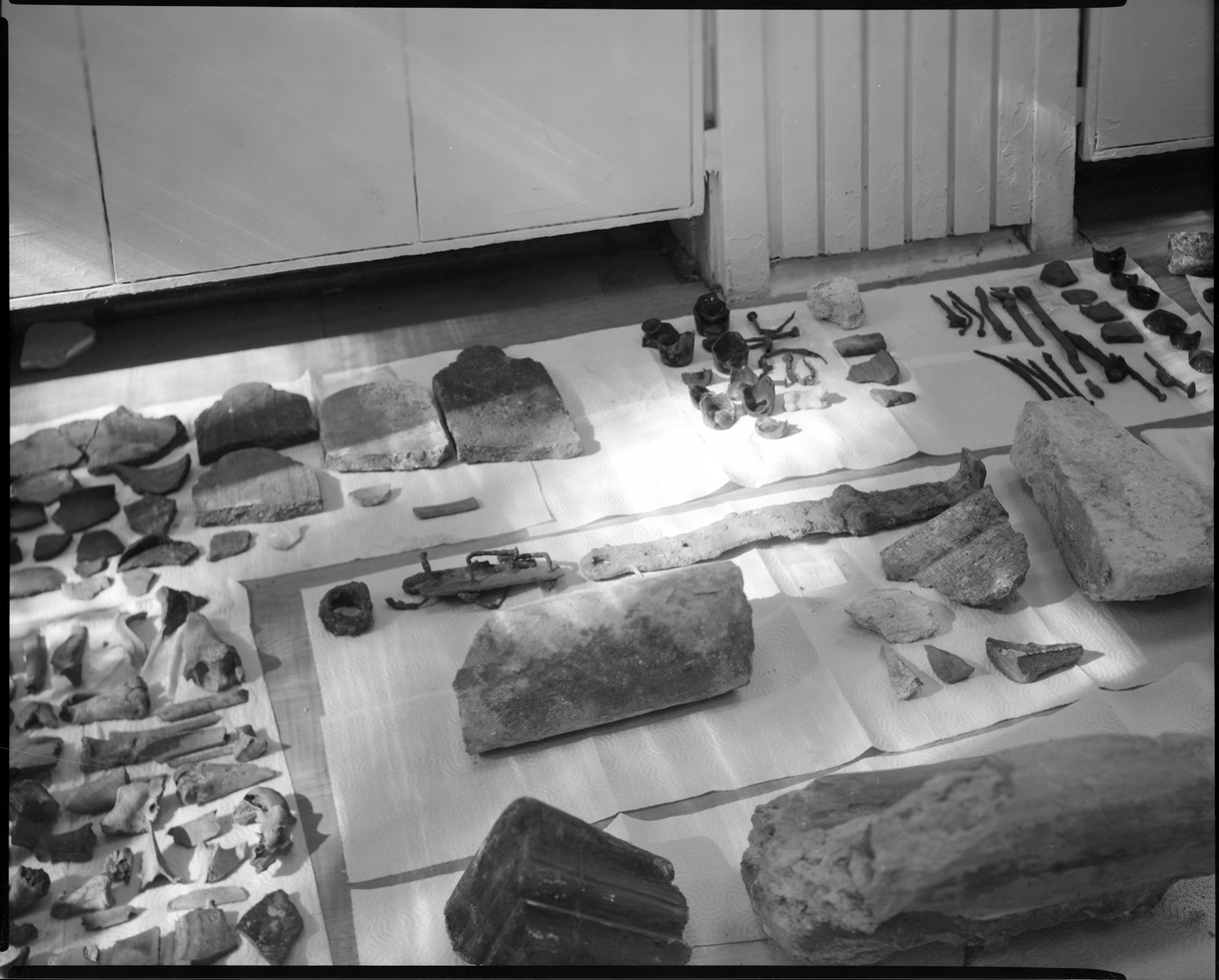
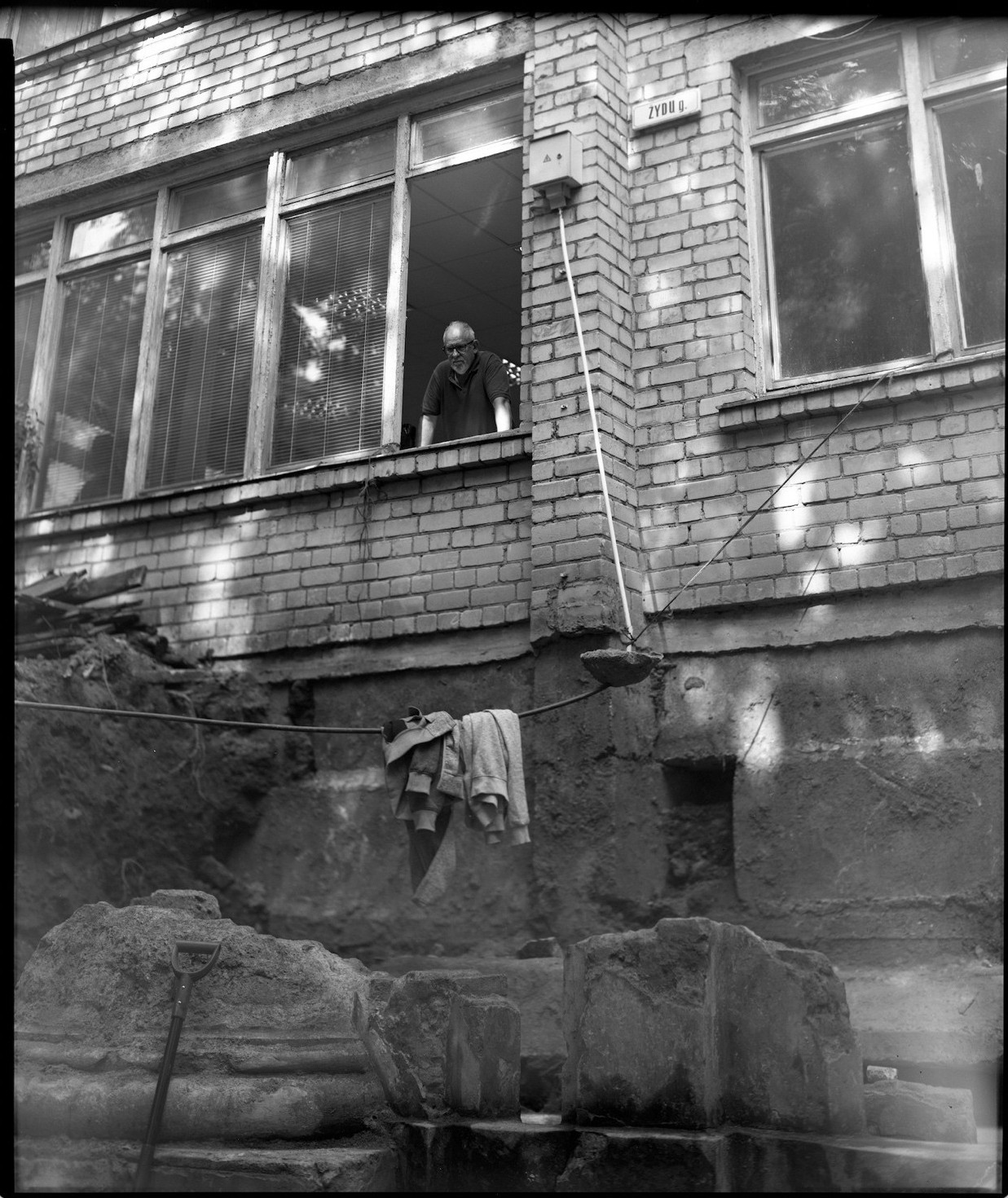
Contributors to the project include Dr. Jon Seligman, Dr. Saulius Sužiedėlis, Tomas Venclova, Cantor Rita Glassman, Dovid Katz and the Vilna Gaon Museum of Jewish History, Vilnius, together with the team of the Great Synagogue and Shulhoyf of Vilna research, excavation, preservation and memorial project – Jon Seligman, Zenonas Baubonis and Justinas Račas.
Exhibitions
- Ronald H. Silverman Fine Arts Gallery, California State University, Los Angeles, 30 May – 7 July 2023. Curated by gallery director Mika Cho, with a closing artist’s talk on 7 July 2023.
- Martynas Mažvydas National Library of Lithuania, Vilnius, 27 January – 31 March 2025. Opened on International Holocaust Remembrance Day in the library’s Exhibition Hall, organised by the Jewish community “Vilnius – Jerusalem of Lithuania”, with violinist Algimantas Peseckas performing at the opening.
- 2413 Hyperion Gallery, Los Angeles, 5–31 October 2025. On its return from Vilnius, with an opening reception on 5 October and an artist’s talk on 29 October 2025.
- VDU Art Gallery “101”, Kaunas, 25 February – 20 March 2026. Opened by the artist with a guided tour of the exhibition.
Sources
- Diversions LA – Unforgettable: Jonas Kulikauskas at Ronald H. Silverman Fine Arts Gallery
- Martynas Mažvydas National Library of Lithuania – Jonas Kulikauskas exhibition I Often Forget
- Kaunas pilnas kultūros – Jonas Kulikauskas exhibition Aš dažnai pamirštu (I Often Forget), VDU Art Gallery “101”
- Hyperallergic – Jonas Kulikauskas Reimagines the Ghetto
- Literatūra ir menas – Jonas Kulikauskas. Aš dažnai pamirštu
- Jonas Kulikauskas – the photographer’s website
The Imagery of Loïc Salfati
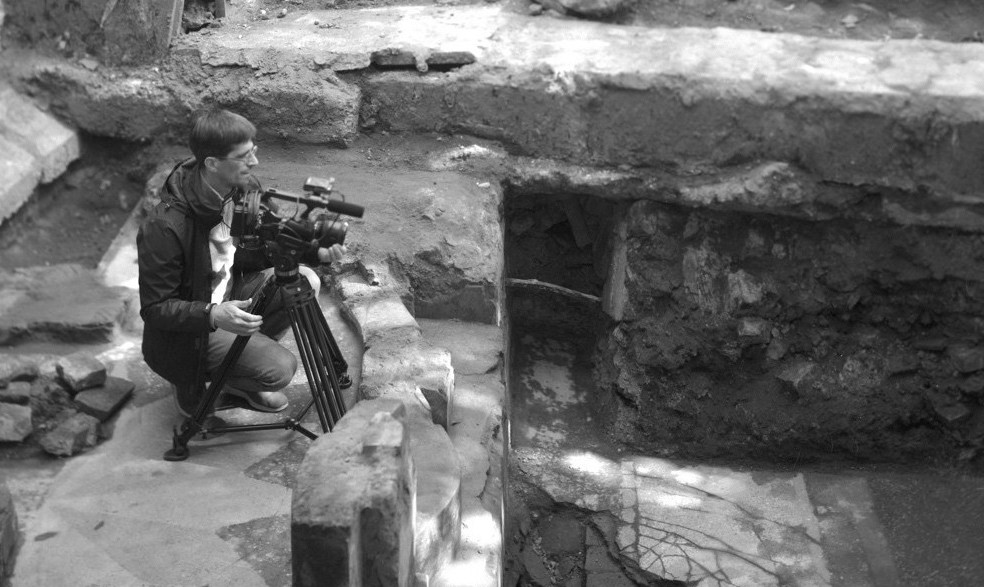
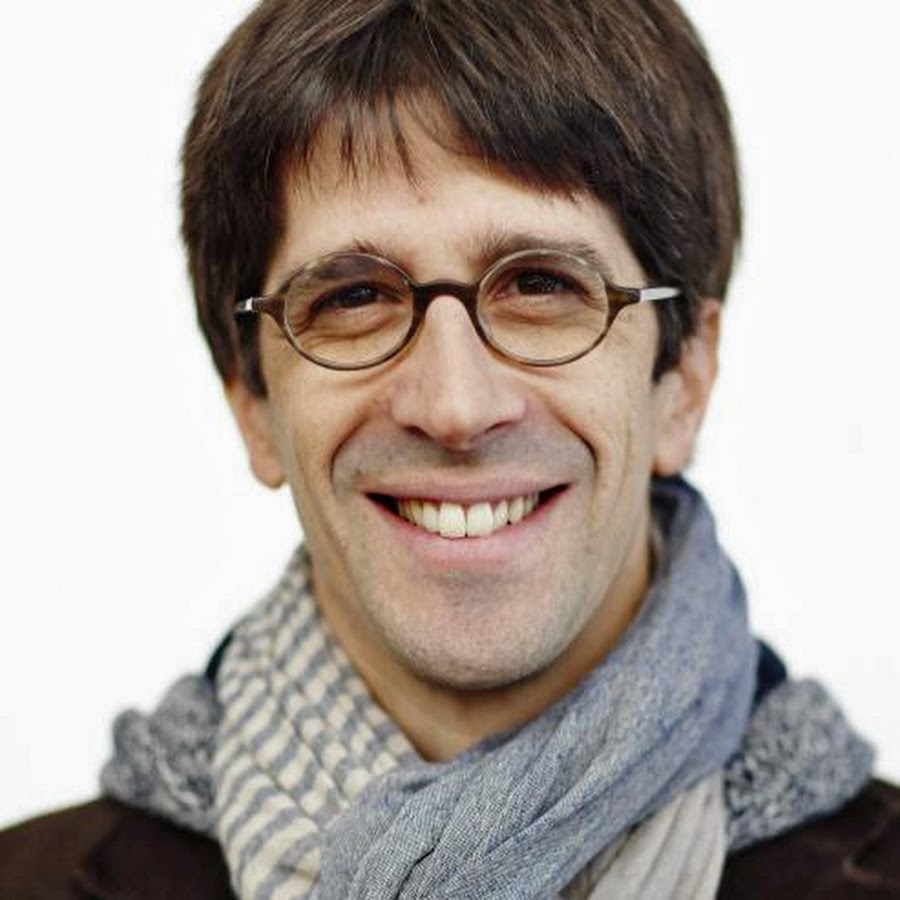
Loïc Salfati is a French cultural project manager, photographer and filmmaker who has lived and worked in Vilnius for more than twenty years. From 2005 he worked at the Institut français de Lituanie – in charge of communication and digital media, producing web documentaries for French museums and curating photography exhibitions of Robert Doisneau and Izis – and from 2020 to 2025 he served as its deputy director and cultural attaché of the French Embassy in Lithuania. A photographer of reportage and street life, he also created the museum web application Que voit-on?. Over the seasons of the excavation his camera became one of the project’s most faithful witnesses.
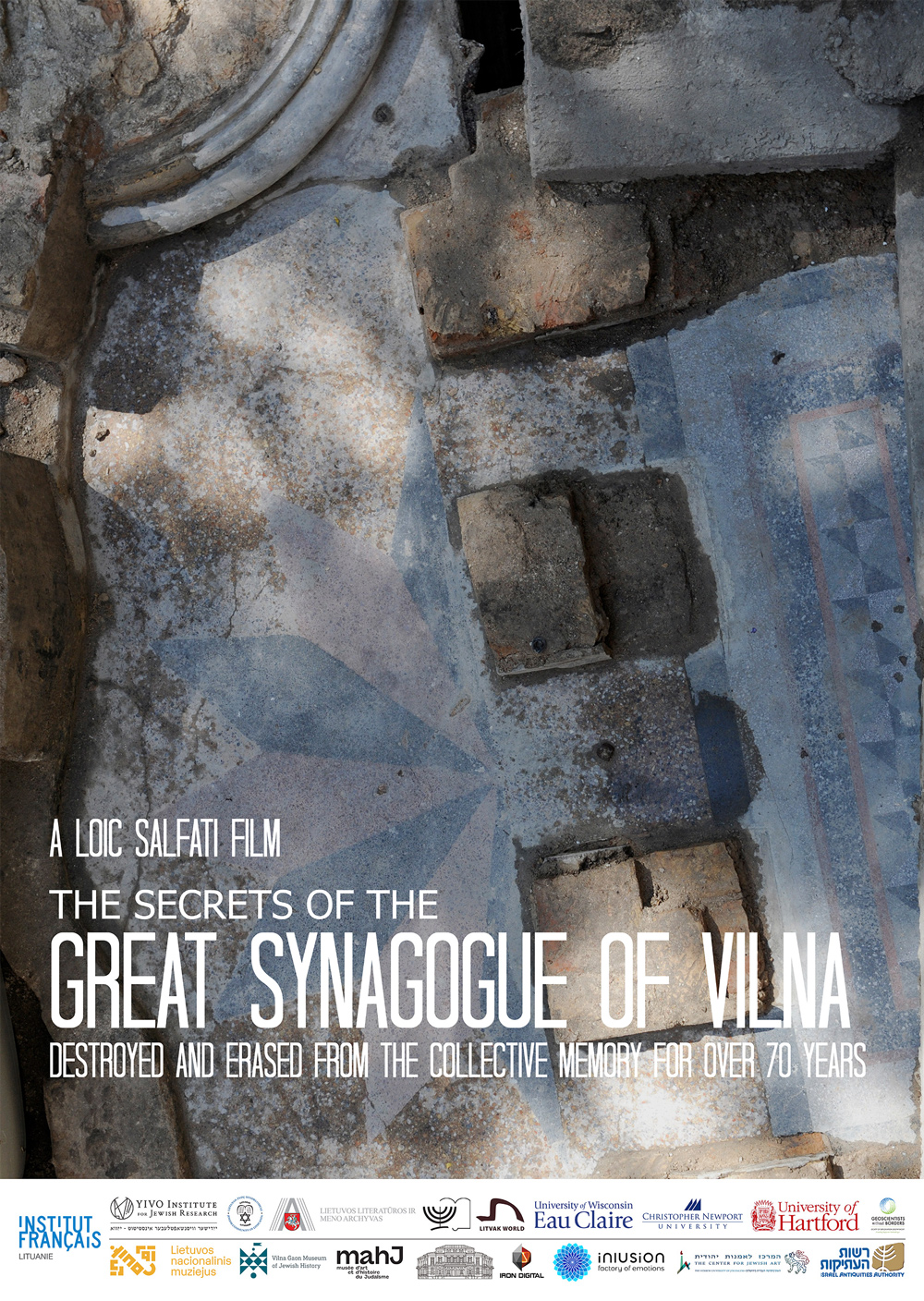
The Secrets of the Great Synagogue of Vilna (2023)
In the heart of Vilnius, an international team of archaeologists sets out to find the remains of the Great Synagogue, destroyed by the Soviet authorities in the 1950s. Because of an old ecclesiastical rule forbidding synagogues to rise higher than the surrounding churches, the floor of the Great Synagogue had been built some two metres below ground. That depth preserved, like a time capsule, the secrets of the synagogue and of the Jewish community of Vilna – and season after season the building re-emerges, more than seventy years after its destruction.
Salfati’s documentary (1 hour 40 minutes) tells the story of the Great Synagogue through interviews in Lithuania, the United States, Israel and France, moving constantly between past and present with the help of extensive archival imagery and 3D reconstructions. It follows the excavation seasons of 2019 and 2021 day by day. Both an archaeological adventure and a historical investigation, the film brings to light the intellectual ferment of Lithuanian Jewry and the prestige of Vilna – the city of a hundred churches and 160 synagogues, compared by Napoleon in 1812 to Jerusalem and remembered as the “Jerusalem of Lithuania”. Today only one of its synagogues still stands. Vilna, Wilno, Vilnius: the city changed its name many times, but in collective memory the Great Synagogue remains the synagogue of Vilna.
“Under the guise of an investigation into an archaeological excavation, Loïc Salfati, by multiplying the angles, succeeds in painting a precise and living picture of a civilisation – that of the Litvaks, of which the Great Synagogue was the centre… A fascinating and important film, often overwhelmingly powerful.”
— Florent Georgesco, Le Monde des Livres (translated from the French)
The Secrets of the Great Synagogue of Vilna · directed by Loïc Salfati · 2023 · 1 h 40 min · Watch on Vimeo
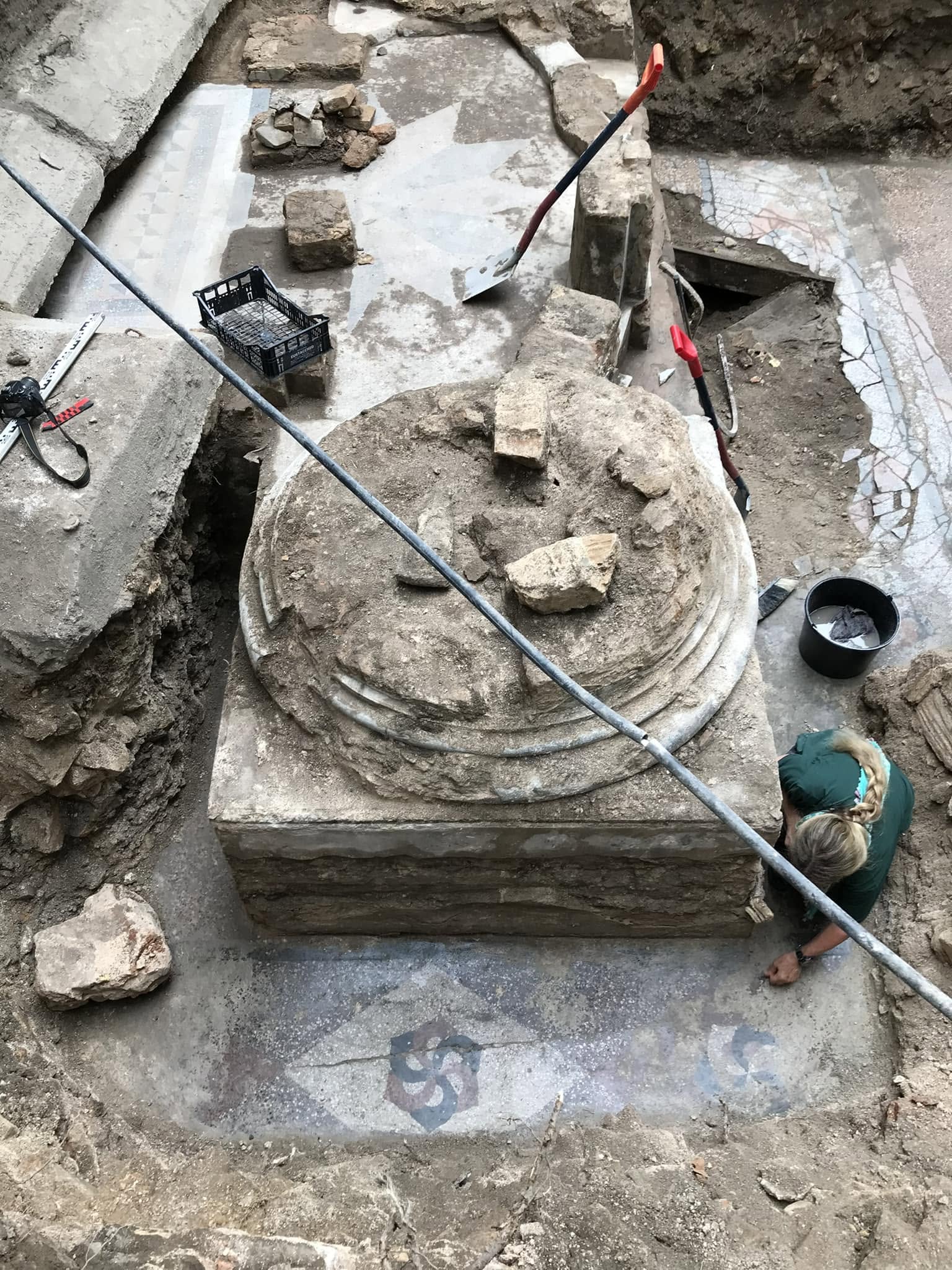
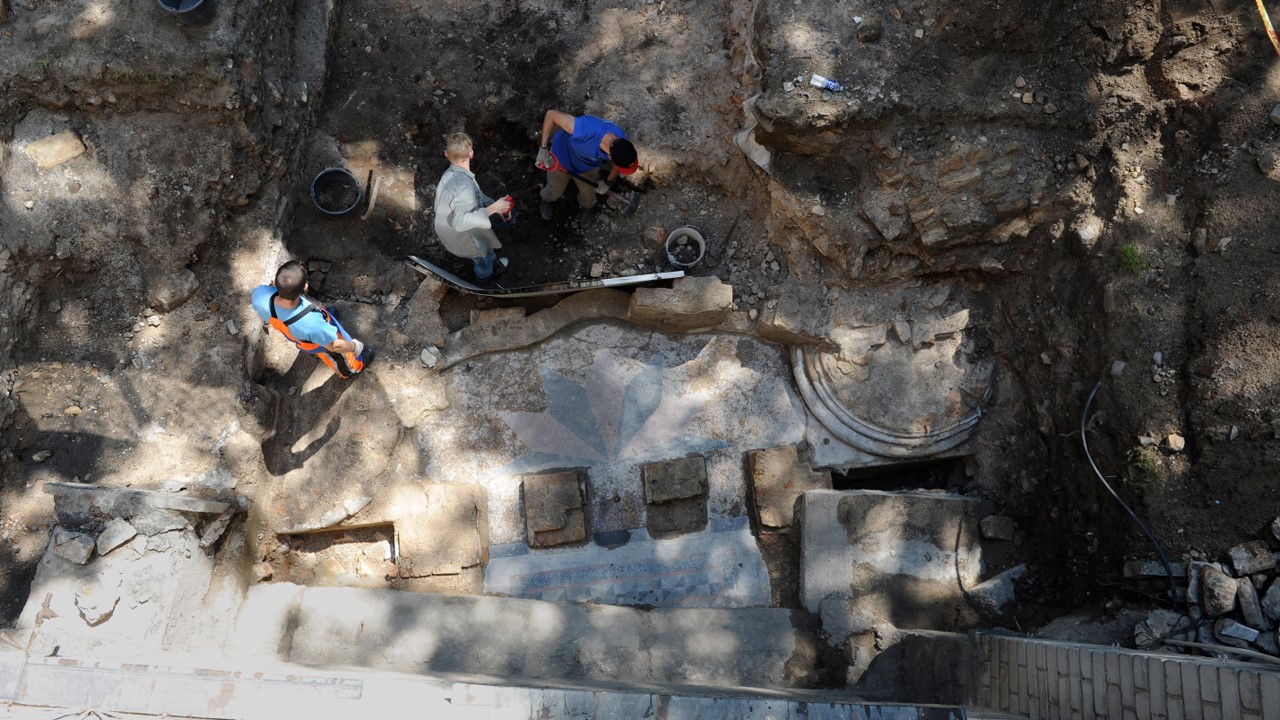
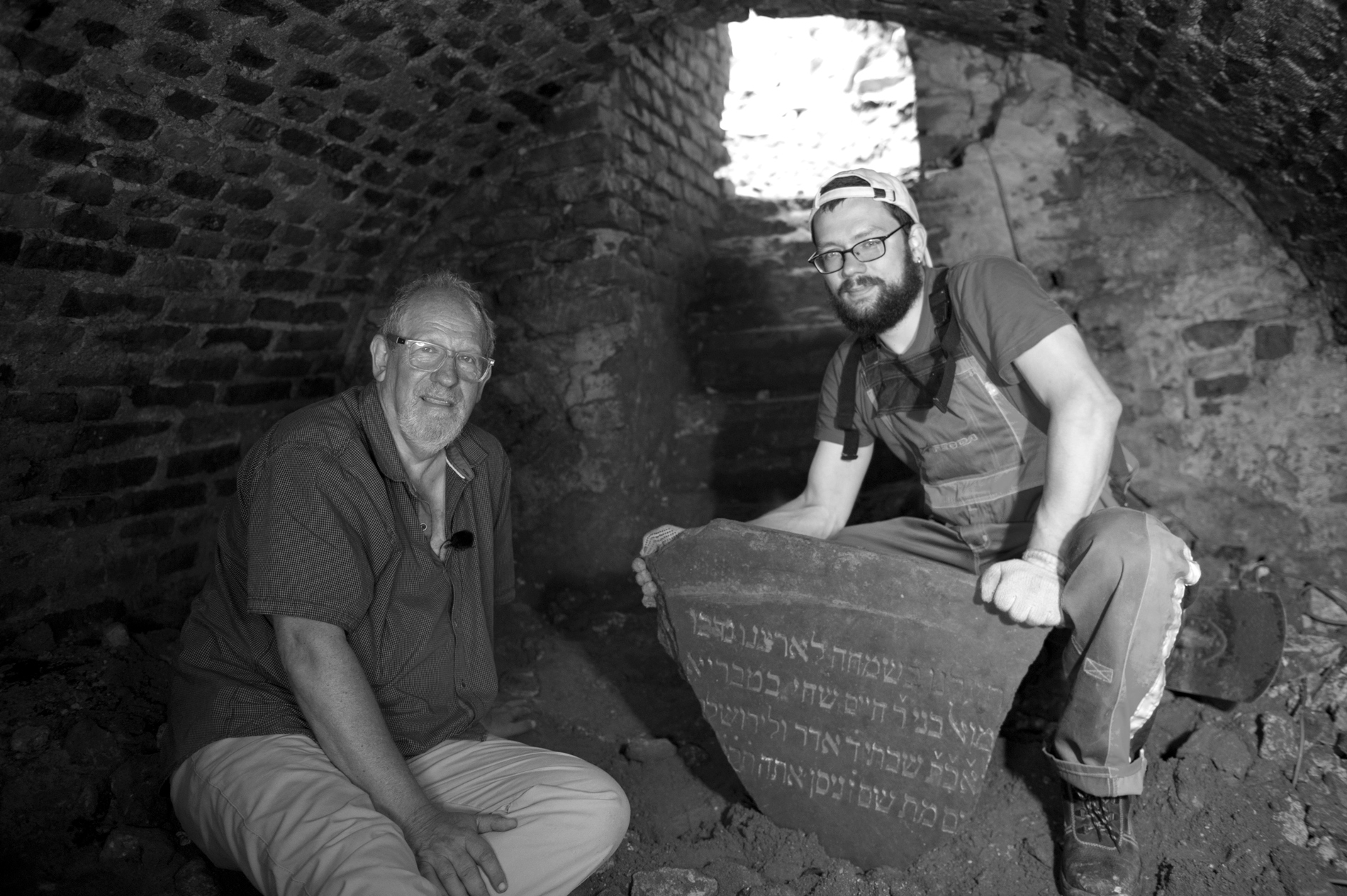
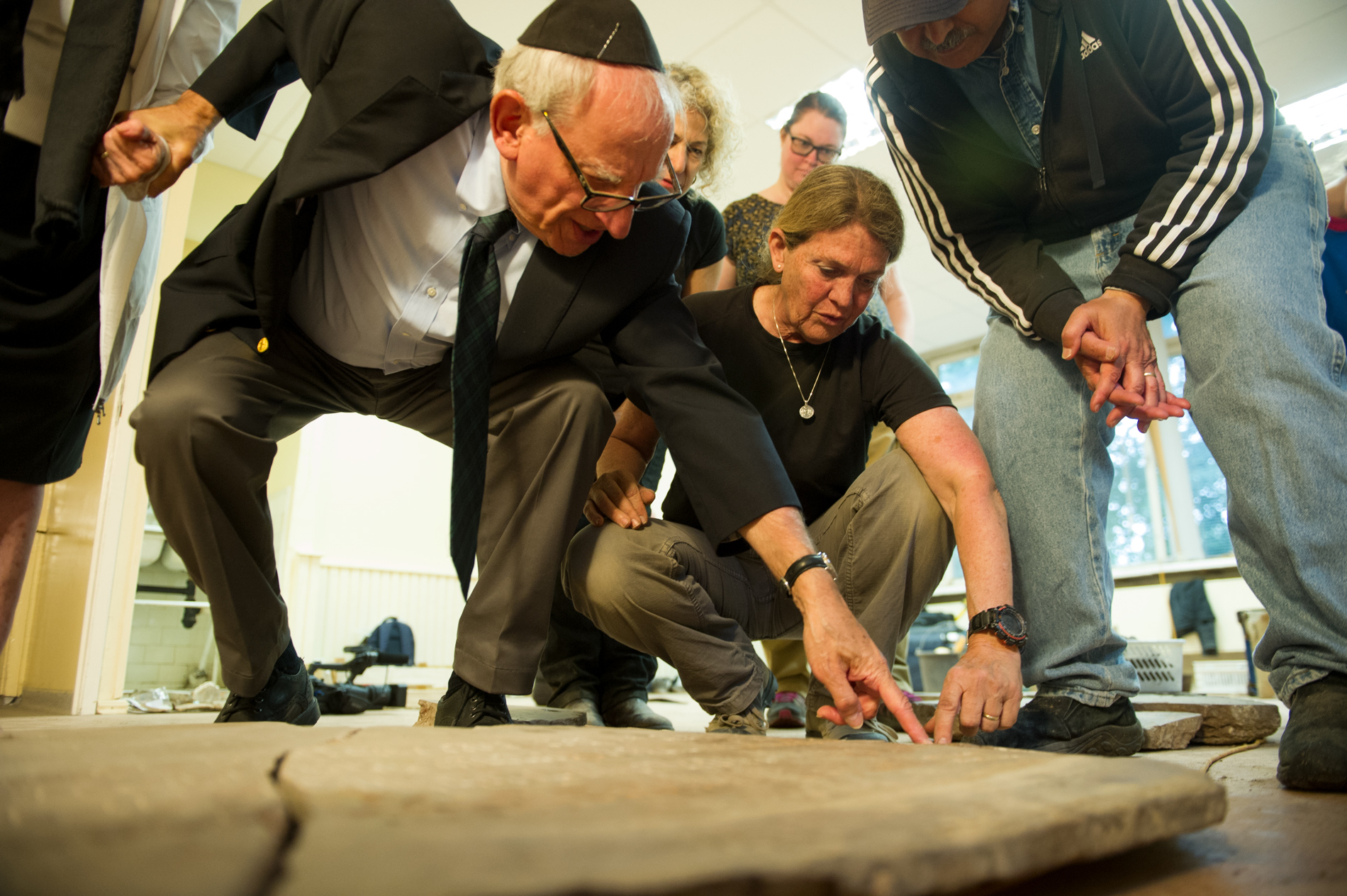
The film had its world premiere in Vilnius in February 2023 and its international premiere in New York in September 2023. In 2024 it was shown at the festival Les Rendez-vous de l’histoire in Blois, at the Musée d’art et d’histoire du Judaïsme (MAHJ) in Paris and at the Tel Aviv Museum of Art.
The film’s partners include the Israel Antiquities Authority, the Center for Jewish Art at the Hebrew University of Jerusalem, YIVO, the MAHJ, the Institut français de Lituanie and the French Embassy in Lithuania, the Vilna Gaon Museum of Jewish History, the National Museum of Lithuania, the Wroblewski Library of the Lithuanian Academy of Sciences, the Lithuanian Archives of Literature and Art, the Lithuanian Jewish Community, the David Labkovski Project, the Steven Spielberg Film and Video Archive of the United States Holocaust Memorial Museum, the University of Hartford and Christopher Newport University.